Training · facilitation · mentorship

Training that becomes practical responsibility.

A twelve-year record of agricultural learning across community, government, nonprofit and farm settings in South Africa and Lesotho.

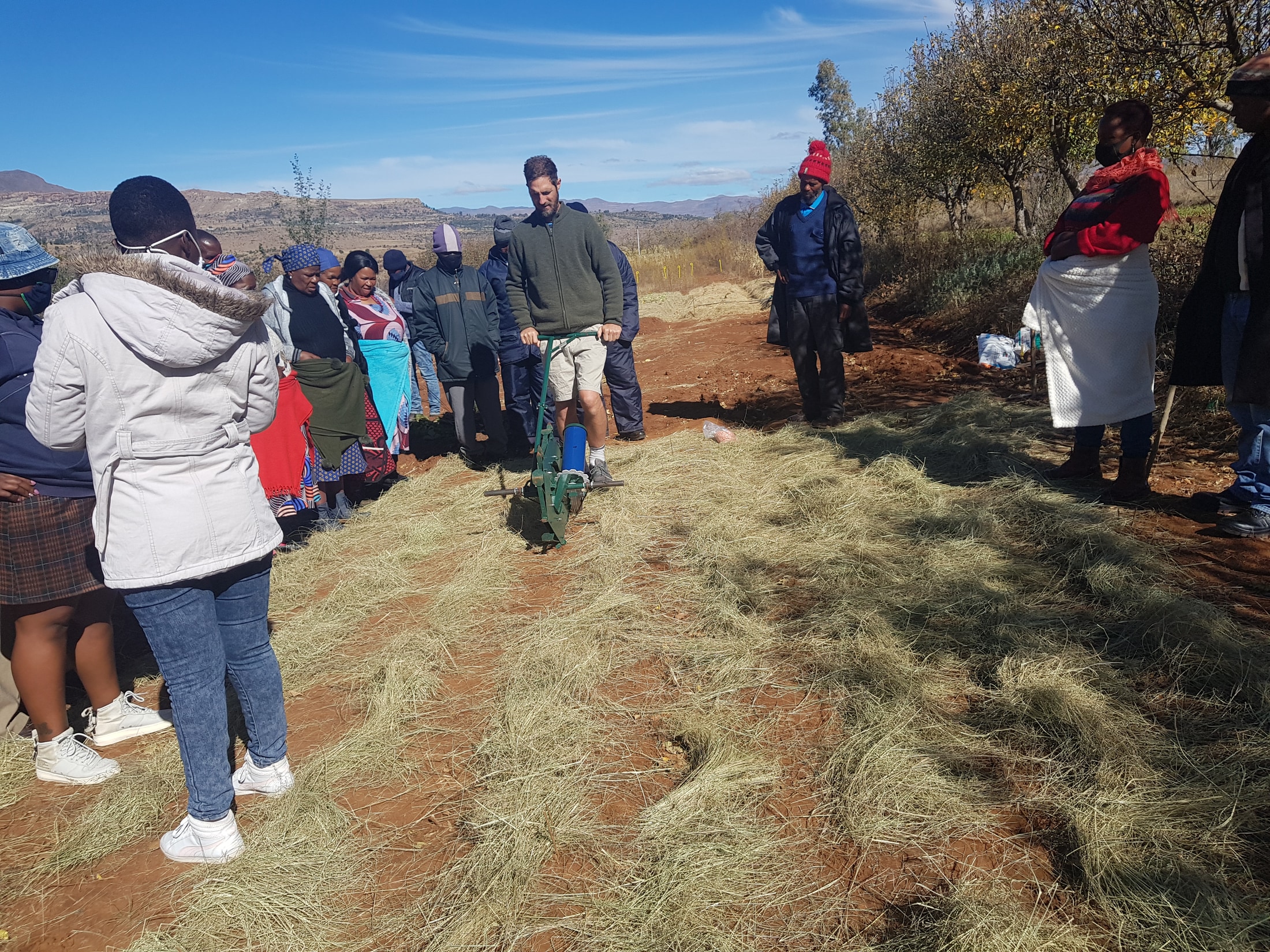
Rory Clark demonstrating a no-till planter with participants gathered around a mulched bed in Lesotho
No-till planting demonstration · Lesotho · 21 May 2021

Course offerings

Choose the depth. Keep the work practical.

Courses are shaped around the people, site and growing system in front of us. Every format combines clear teaching with work that participants can repeat after the course.

Discuss a training programme

Language optionsEnglish delivery with Rory Clark and isiZulu delivery with Zimisele Luthuli. Sesotho facilitation is available by arrangement.

Built for the host siteThe final timetable, practicals and materials are agreed around the group, season and facilities available.

01

Site-based workshop

1 day

Introduction to permaculture

A practical introduction to permaculture principles and ecological growing, shaped around the host site and the work participants need to begin.

Who it is for

Schools, community groups, garden teams and new growers who want a useful first step.

Typical focus & takeaways
  1. Foundations

    Permaculture principles and ecological growing practices.

  2. Read the site

    Connect the principles to a school, homestead or community garden.

  3. Work together

    Complete a practical task and agree useful next steps for the site.

What participants get
  • A clear grounding in permaculture ethics and principles
  • Guided observation of the host garden or growing site
  • A practical garden activity selected for the group
The balance of discussion and fieldwork is agreed with the host rather than fixed to a generic timetable.

Ask about this course
02

Foundation course

5 days

Permaculture & regenerative agriculture

Five connected days of design, soil care, water and climate resilience, agroforestry, propagation, food security and small-enterprise thinking.

Who it is for

Community programmes, nonprofits, farm teams and growers who need a broad practical foundation.

Five-day outline & takeaways
  1. Day 1 · Foundations

    Permaculture, regenerative agriculture, ethics, principles and a teaching-site tour.

  2. Day 2 · Design & resilience

    Site assessment, zones, sectors, contour work, bed building and climate responses.

  3. Day 3 · Soil & ecology

    Living soil, compost, worm farming, natural fertilisers, diversity and pest management.

  4. Day 4 · Food systems

    Agroforestry, food forests, conservation agriculture, preservation and year-round food.

  5. Day 5 · Propagation & livelihoods

    Nursery practice, cuttings, seedlings, pricing, quality, marketing and course closure.

What participants get
  • Field practice supported by a full course handbook
  • A group design exercise grounded in a real site
  • A certificate of attendance recording the course topics
03

Intensive practical course

10 days

Agroecological Farming Practices

An intensive two-week course moving from homestead design and water systems through soil, production, propagation, food use, seed and practical completion.

Who it is for

Cohorts that need deeper field capability and organisations exploring a formally assessed route.

Ten-day outline & takeaways
  1. Day 1 · Orientation & foundations

    Course orientation, homestead permaculture, a teaching-site tour, ethics and principles.

  2. Day 2 · Planning & design

    Garden planning, element analysis and preparation of the site.

  3. Day 3 · Layout & water

    Bed types, earthworks, rainwater and greywater systems, storage and irrigation design.

  4. Day 4 · Homestead ecology

    Companion planting, rotation, pest and disease control, and a tyre-pond practical.

  5. Day 5 · Soil & plant nutrition

    Soil analysis, soil building, compost, plant nutrition and soil-enhancer demonstrations.

  6. Day 6 · Production systems

    Kitchen and staple gardens, food forests, chickens, bees, agroforestry and seasonal planning.

  7. Day 7 · Propagation & useful plants

    Nursery practice, propagation, medicinal and indigenous plants, and alien-invasive management.

  8. Day 8 · Using the harvest

    Sprouting, fresh preparation, preservation, fermentation and other ways to use garden produce.

  9. Day 9 · Seed, energy & shelter

    Seed saving, energy efficiency, green building, water systems and renewable energy.

  10. Day 10 · Practical completion

    Complete practical outputs and, where formal assessment is contracted, portfolios of evidence; then feedback and closure.

What participants get
  • Ten days of connected classroom and field learning
  • Practical outputs completed through the course
  • A portfolio of evidence when formal assessment is contracted

The curriculum has historic alignment to three NQF Level 2 unit standards totalling 14 credits. Credits require assessment, moderation and result processing through a current accredited partner; otherwise the course is delivered as a non-accredited practical programme.

Ask about this course
04

Focused workshop

Half or full day

Practical seed saving

A focused workshop on selecting plants, understanding pollination, harvesting seed and preparing it for clean, labelled storage.

Who it is for

Community seed groups, garden clubs, schools and growers who want to keep and exchange reliable seed.

Workshop themes & takeaways
  1. Seed & diversity

    Open-pollinated, heirloom, hybrid and other seed types; food security and agrobiodiversity.

  2. Selection & pollination

    Choosing parent plants, flower biology and methods for keeping varieties true.

  3. Harvest & storage

    Dry and wet processing, cleaning, drying, labelling, packing and safe storage.

What participants get
  • Practice with harvesting, cleaning, drying and packing
  • Seed-saving notes and crop-specific guidance
  • An optional seed exchange when the host group brings seed

The half-day or full-day emphasis is adapted to the crops, season and seed available at the host site.

Ask about this course

Plan a useful course

Start with the group, the site and the work to be done.

Share the location, likely participant numbers, preferred language and the skills you want people to leave with. Rory can then recommend a format and scope for the programme.

Start a training enquiry

The method

Learn by doing the real work.

Attendance is only a starting point. The recurring task is to connect instruction with the work people will be responsible for after the session ends.

01

Demonstrate

Start with the task itself: read the site, handle the tool, see the soil, lay out the work and explain why each decision matters.

02

Practise

Move quickly from explanation to supervised work in gardens, nurseries, water systems and live farm operations.

03

Equip

Leave usable material behind: manuals, facilitator notes, training kits, assessment tools and records that support the next task.

04

Return

Use follow-up visits and mentorship to connect a course with the responsibility of keeping a site or operation working.

Tatsfield / Mighty Greens · Agri Training

Agricultural training at Tatsfield.

Classroom learning and practical farm sessions at Tatsfield / Mighty Greens during the 2023 agricultural training programme.

Imbewu Jirah Training Promo · 2023. A collaboration between Imbewu, Jirah Academy, Mighty Greens and Eyethu.

See the farm enterprise record
1 minute 54 seconds · agricultural training · 2023Imbewu · Jirah Academy · Mighty Greens · Eyethu

Lesotho · 5 May 2021

Participants explain their designs.

A group presents its site model, explains how roof overflow and runoff reach a pond, then tests water flow with a watering can.

45 seconds · 5 May 2021Site-model presentations and a water-flow demonstration · Lesotho

Teaching on the ground

Use the site as the teaching material.

A soil profile, a crop row or a water line makes the decision visible. Participants can question it, try it and see how it fits the whole system.

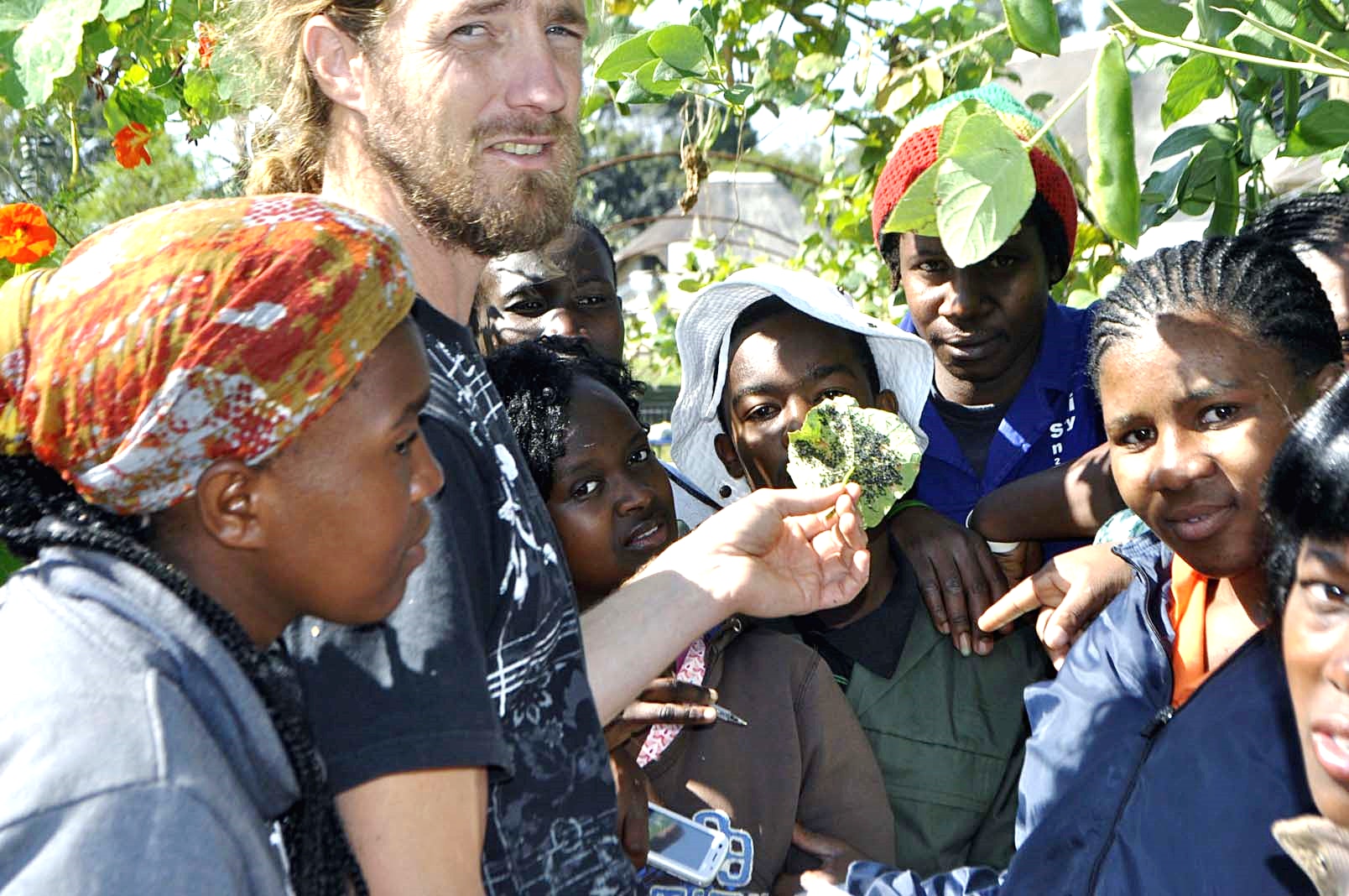
Rory Clark holding up a damaged brassica leaf while a group gathers closely around him in a garden
Working through a crop problem with the group in the garden
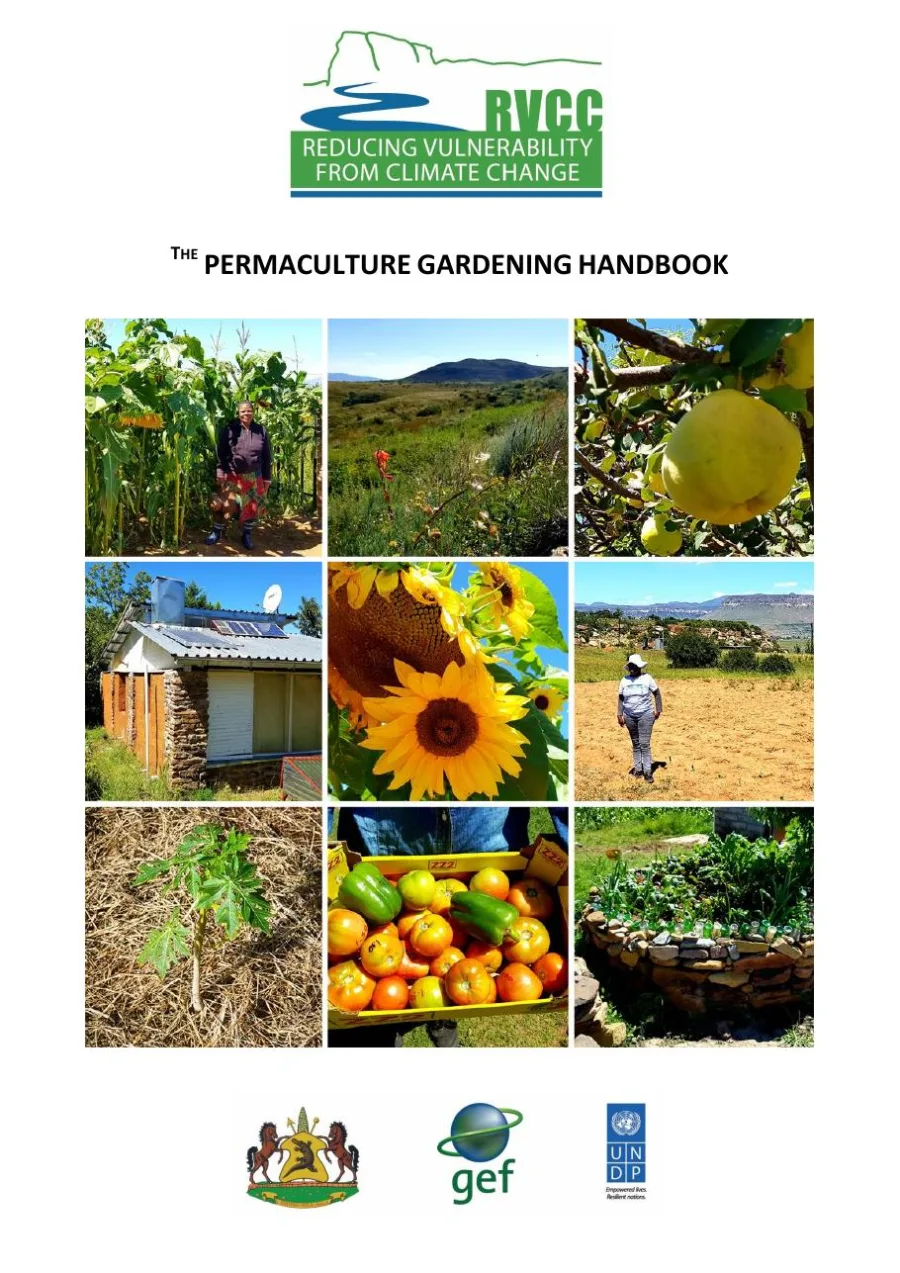
Cover of The Permaculture Gardening Handbook by Rory Clark
Course companion · June 2020 · sample available

Preview the course handbook

The Permaculture Gardening Handbook

A practical companion to a five-day permaculture course covering site design, vegetable and animal systems, trees, water and earthworks, soil building, pest control and appropriate technology.

The handbook turns the course into a field reference: something a participant or facilitator can return to while planning and carrying out the work.

Download a sample PDF · 8 sample pages

The full handbook is supplied through the course. Get in touch to discuss training and learning materials.

Course materials · Lesotho, May 2021

A five-day course, recorded clearly.

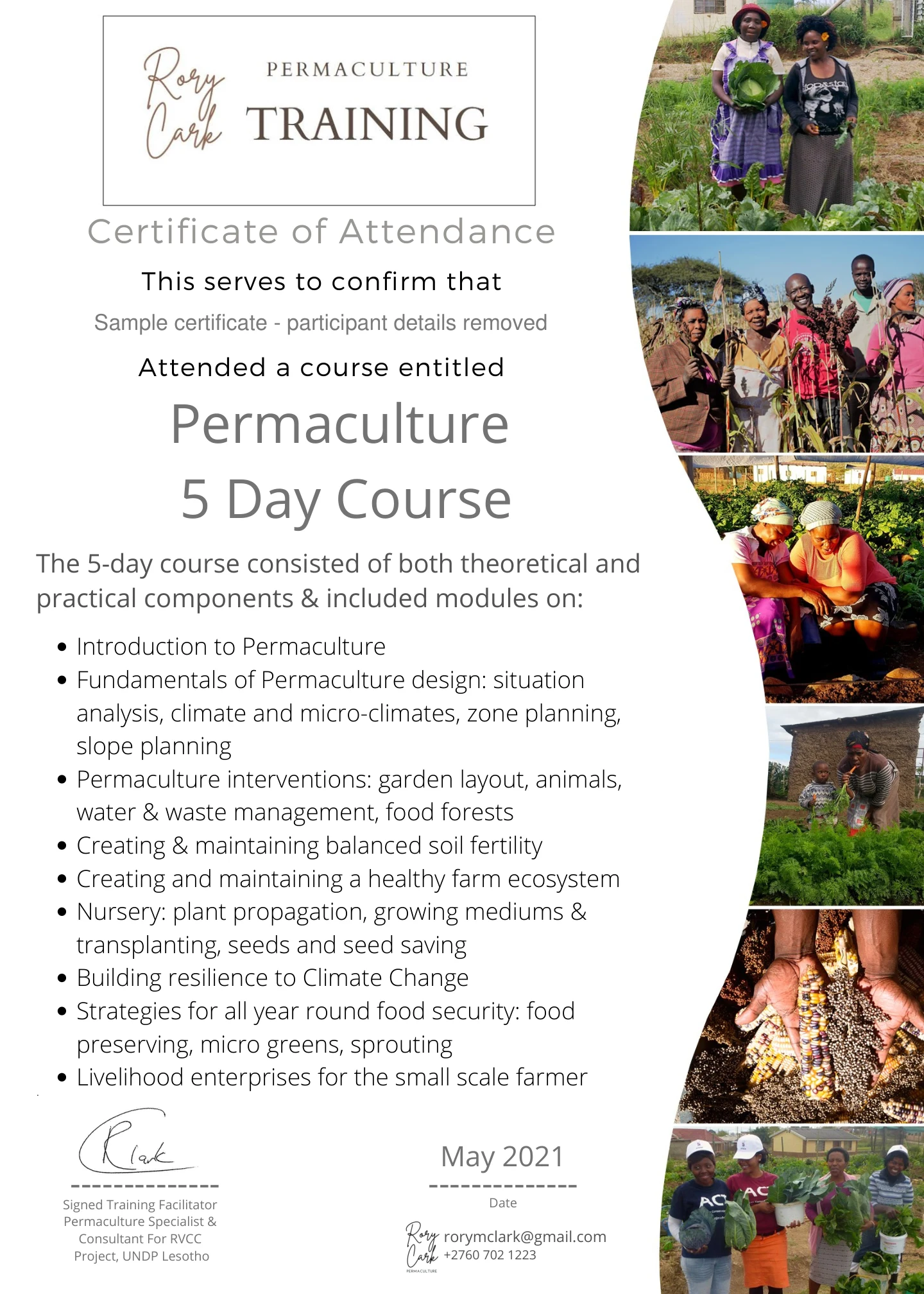
I designed this attendance certificate for participants in the RVCC permaculture courses in Lesotho. It records the course date and the topics covered through theory and practical work.

  • Site assessment, climate, zones and practical garden design.
  • Soil fertility, water, food forests and healthy farm ecosystems.
  • Propagation, seed saving, food security and small-farm livelihoods.

This sample keeps the original course outline and photographs, with the participant’s name and identity number removed.

Explore the RVCC programme Download the sample Attendance certificate · PDF · 1 page
Sample of Rory Clark's five-day permaculture attendance certificate, listing course modules beside photographs of growers and gardens
Original course certificate · sample copy · May 2021

Examples from the verified record

Training in the record.

Reported training outputs from individual programmes, with links to the relevant project records.

Training inside the work

Training appears here as part of programme delivery, community infrastructure and farm operations.

A no-till planting demonstration in Lesotho

Government extension · practical field delivery

Climate resilience in Lesotho

Courses, open days, demonstration gardens, a training manual and national guidance delivered across three community councils.

Read the case study
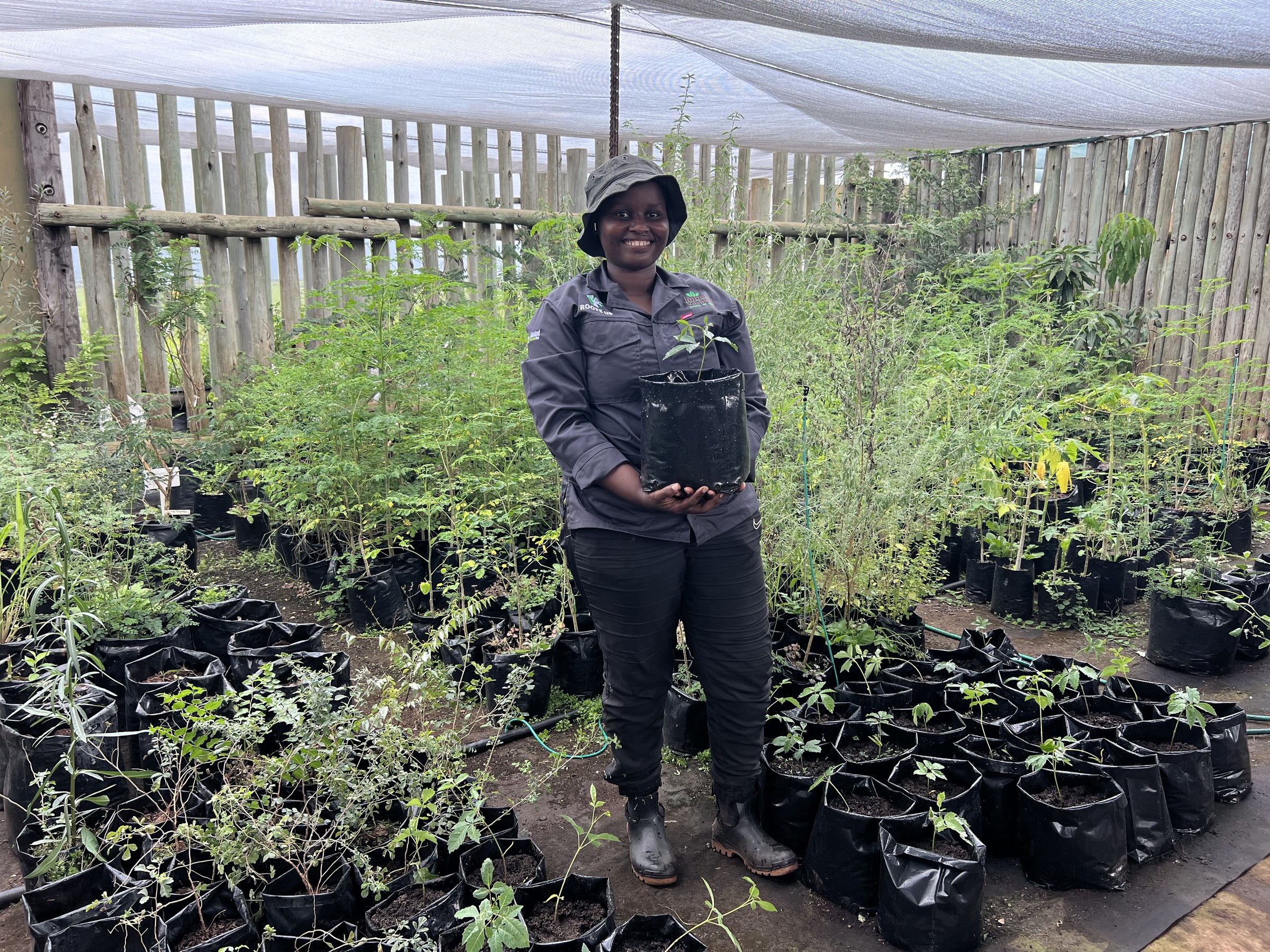
A facilitator holding a young tree in the Manyoni nursery

Community systems · mentorship

Mandlakazi food security

Crèche gardens, household support, water harvesting and a nursery developed as linked places for learning and production.

Read the case study
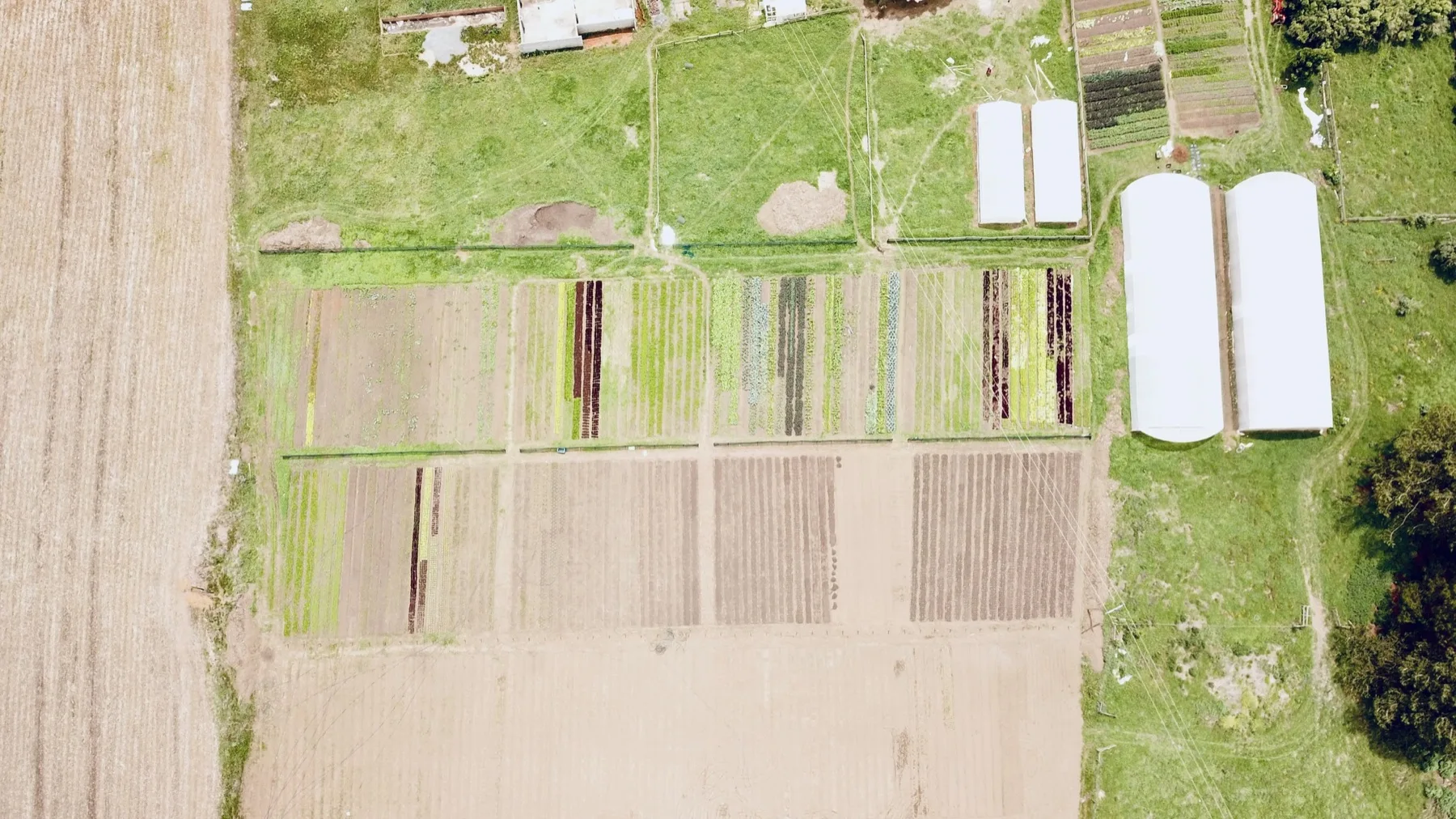
An aerial view of the Tatsfield farm and production systems

Workplace learning · farm operations

Tatsfield / Mighty Greens

A working organic farm used to develop practical capability across production, nursery work, machinery, packing and administration.

Read the case study