Record 0111Case study

Climate resilience in Lesotho
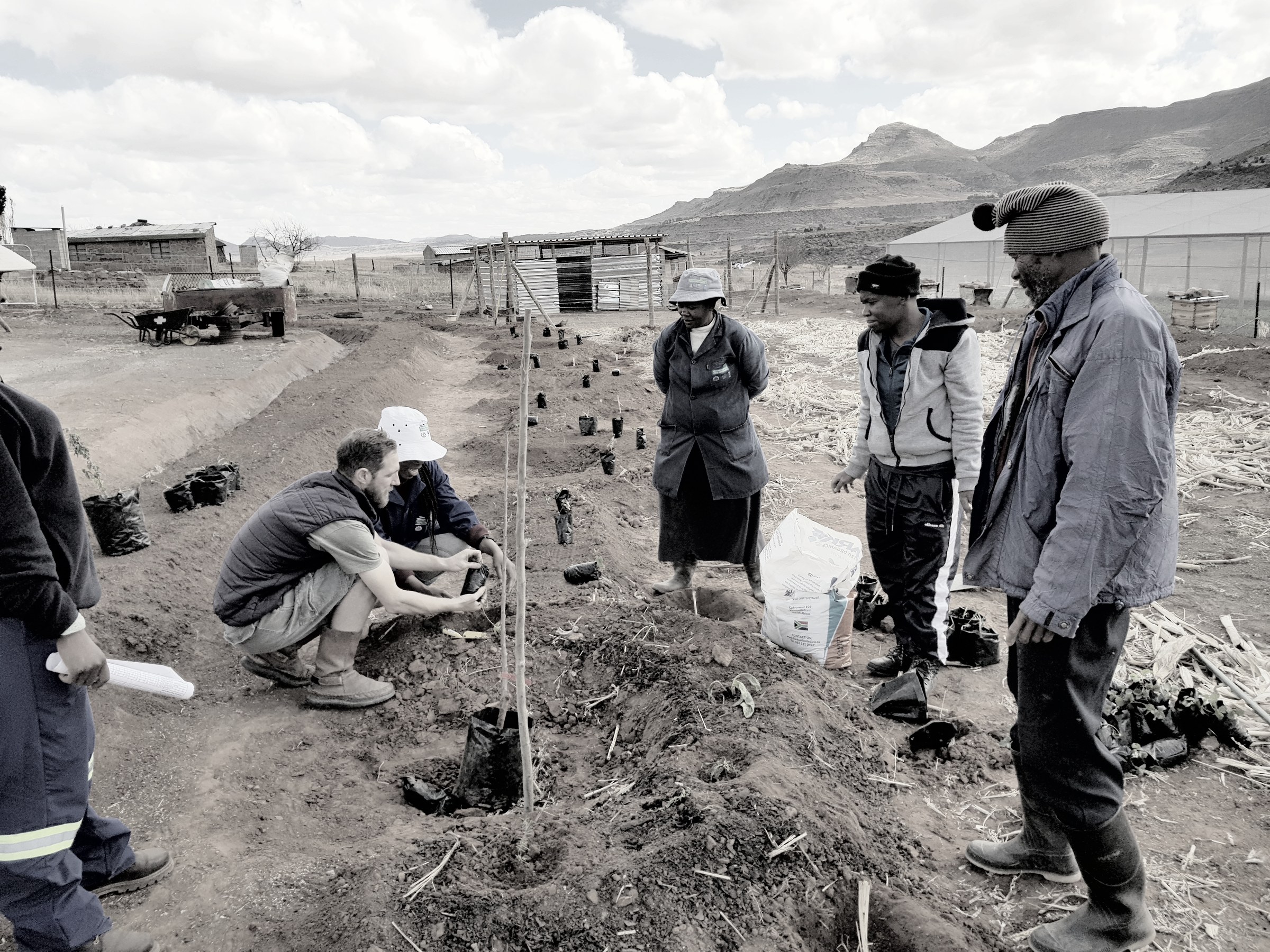
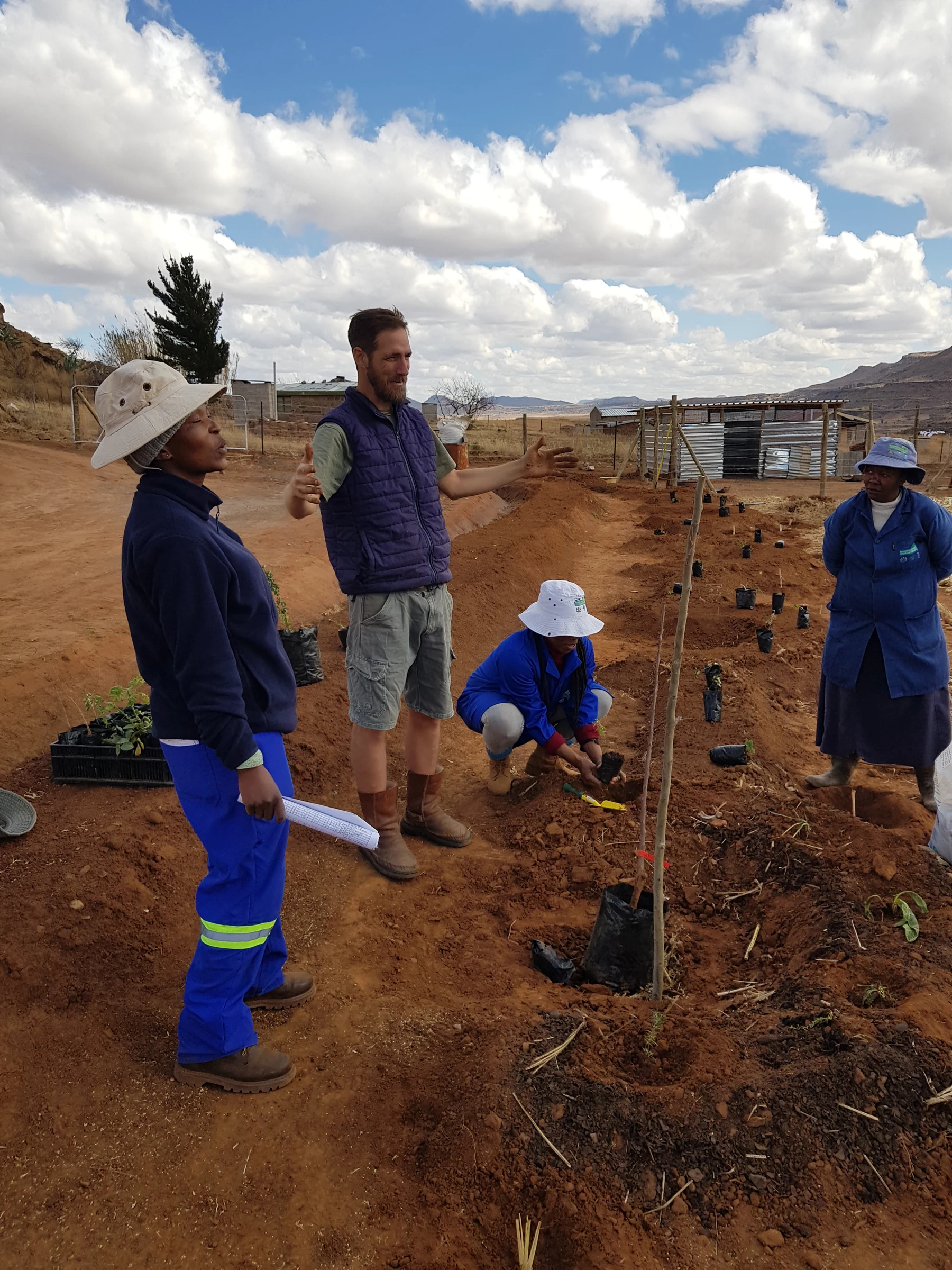
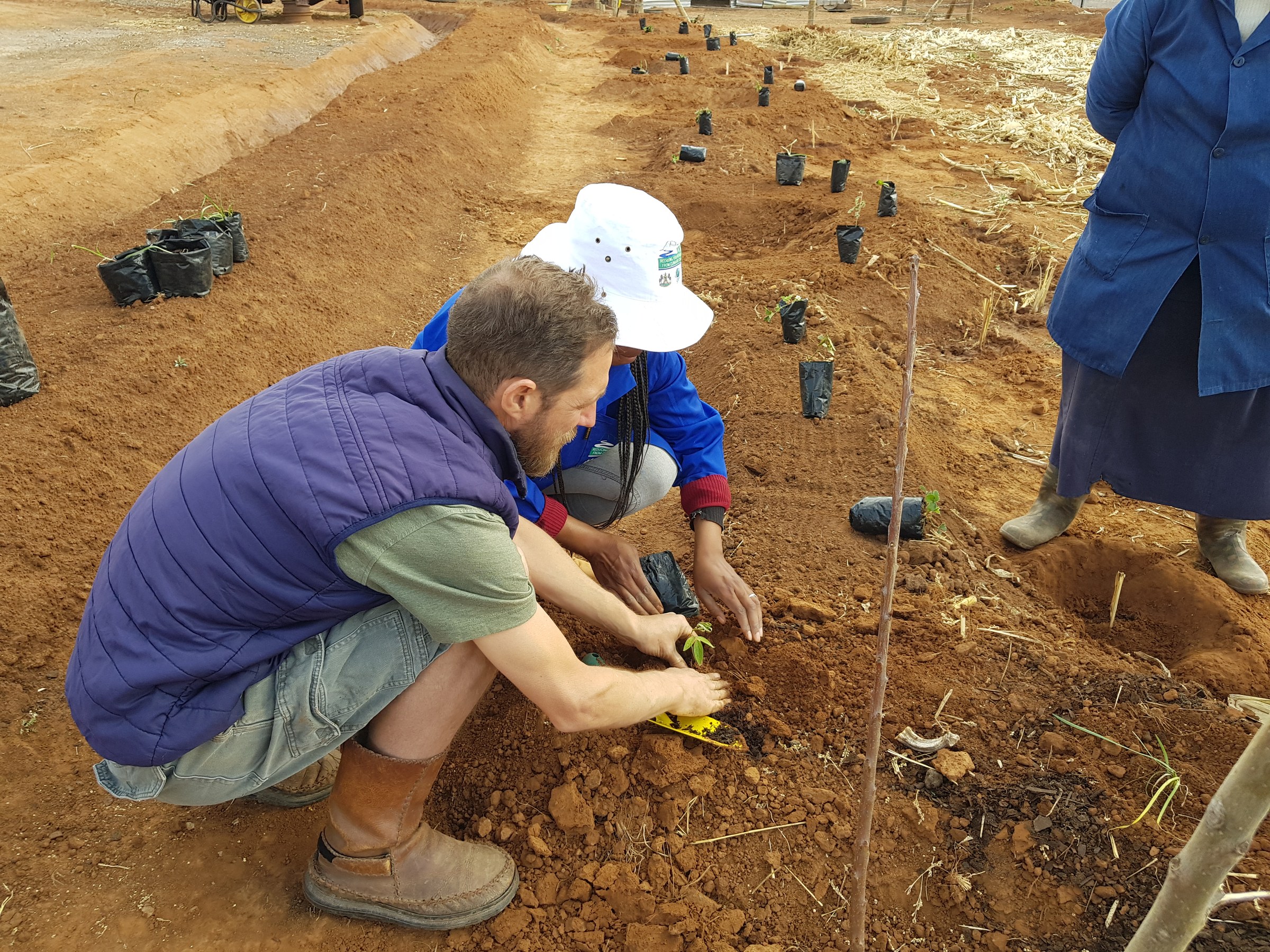
Rory Clark planting a young tree with members of a Lesotho field team at an RVCC demonstration garden, with the mountain landscape and farm infrastructure visible behind them
Programme
Reducing Vulnerability from Climate Change in the Foothills, Lowlands and the Lower Senqu River Basin · UNDP Lesotho, funded by the Global Environment Facility
Role
Permaculture International Consultant
Place
Lesotho
Period
2020 — 2021

190

people trained on the courses and open days, against a target of 80

Read from RVCC Permaculture Project Close-out Report, October 2021

Shown here

  • 13 report photographs
  • Report figure

Read from

  • Close-out report
Delivering practical training and demonstration gardens across three community councils while producing national guidance for wider institutional use.

Project frame

The brief.

The project needed more than standalone workshops. It needed practical demonstration sites, capable supervisors, durable training material and guidance that government extension services could use beyond the assignment.

Mandate

International consultant responsible for training, farm assessments, gardens, the manual and national guidance.

Collaborators

Ministry teams, UNDP / GEF programme staff, government representatives, lead farmers and participants.

Delivery constraint

Three community councils and a need for continuity beyond one-off workshops.

Work in practice

What I did

  1. Deliver practical training

    Built and delivered the permaculture training programme for government representatives, lead farmers and programme participants.

  2. Prepare field supervision

    Drafted the terms of reference for six supervisors subsequently employed by the Ministry.

  3. Assess and establish gardens

    Completed 20 farm assessments and established 20 permaculture gardens across the programme area.

  4. Coordinate site infrastructure

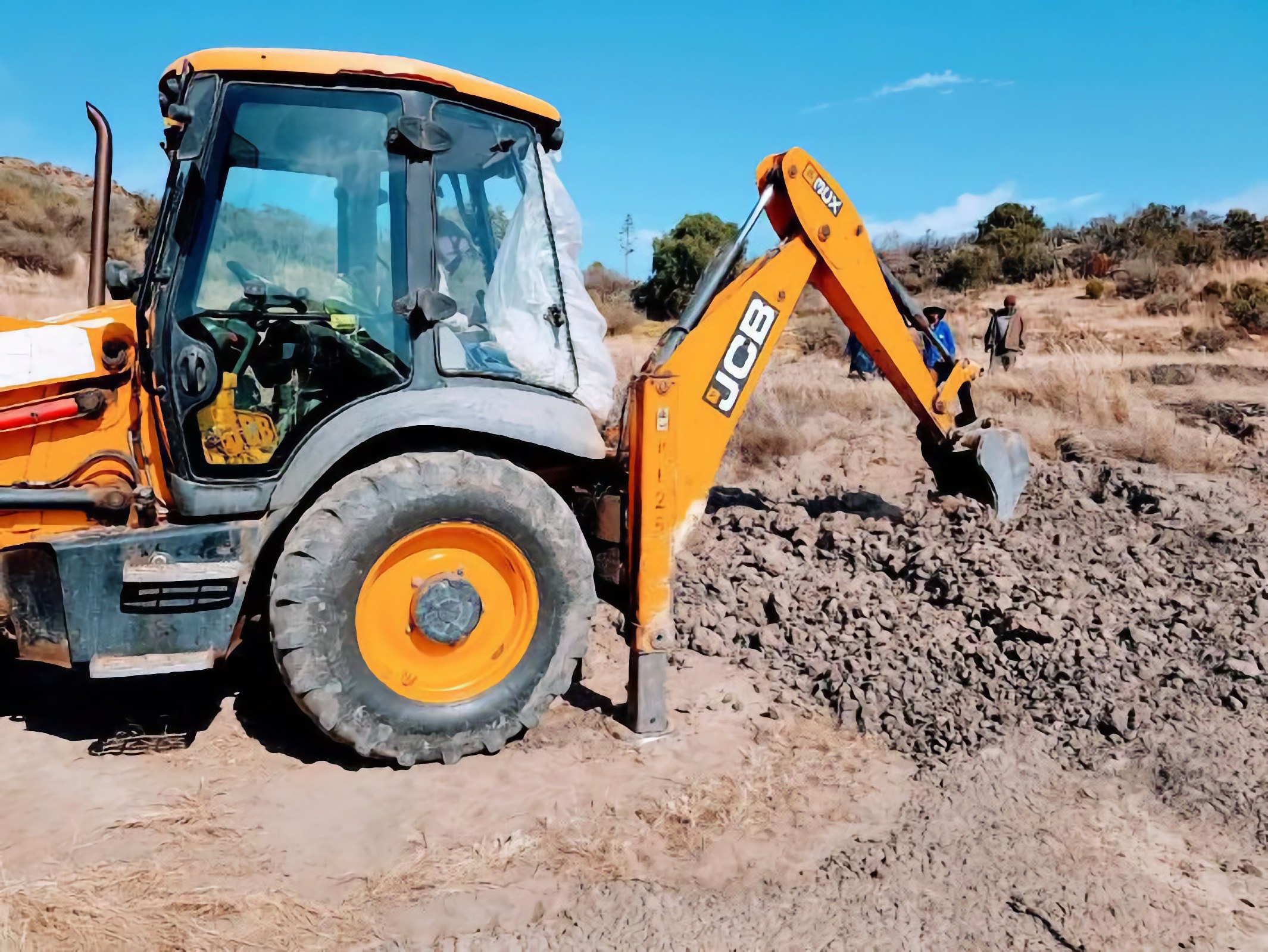
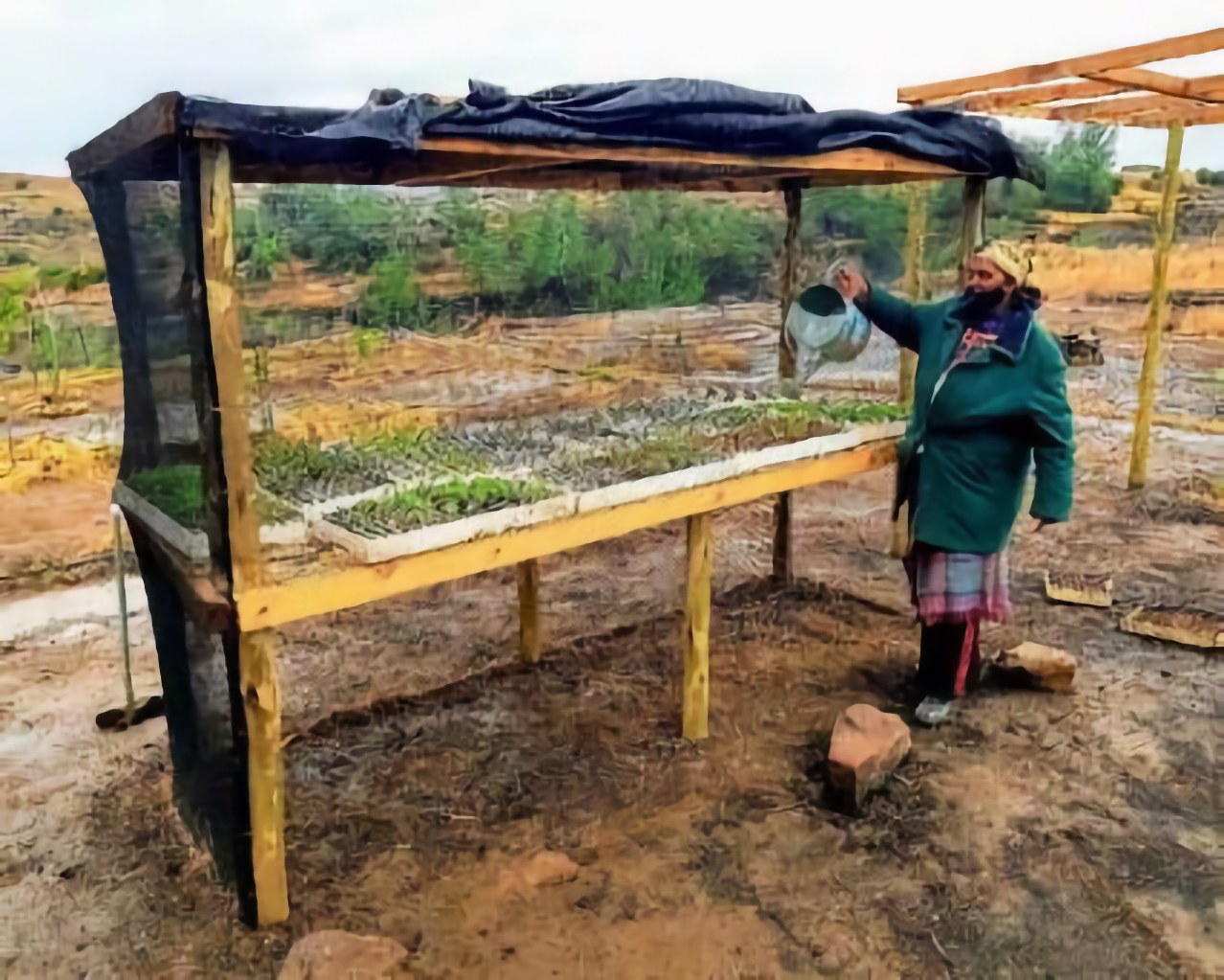
    Coordinated water systems, fencing, nurseries, animal systems, tools and planting material across the demonstration and subset gardens.

  5. Establish perennial production

    Established perennial production with 906 trees, 1,232 berry and vine plants, 553 herb and support plants, and 13,000 vetiver plants.

  6. Extend community learning

    Extended the programme through five community open days attended by 130 people and supported technical staff to co-facilitate the training.

  7. Build institutional resources

    Produced a permaculture manual, national guidelines and a policy brief for institutional use.

Rory Clark planting a young tree with members of a Lesotho field team at an RVCC demonstration garden, with the mountain landscape and farm infrastructure visible behind them

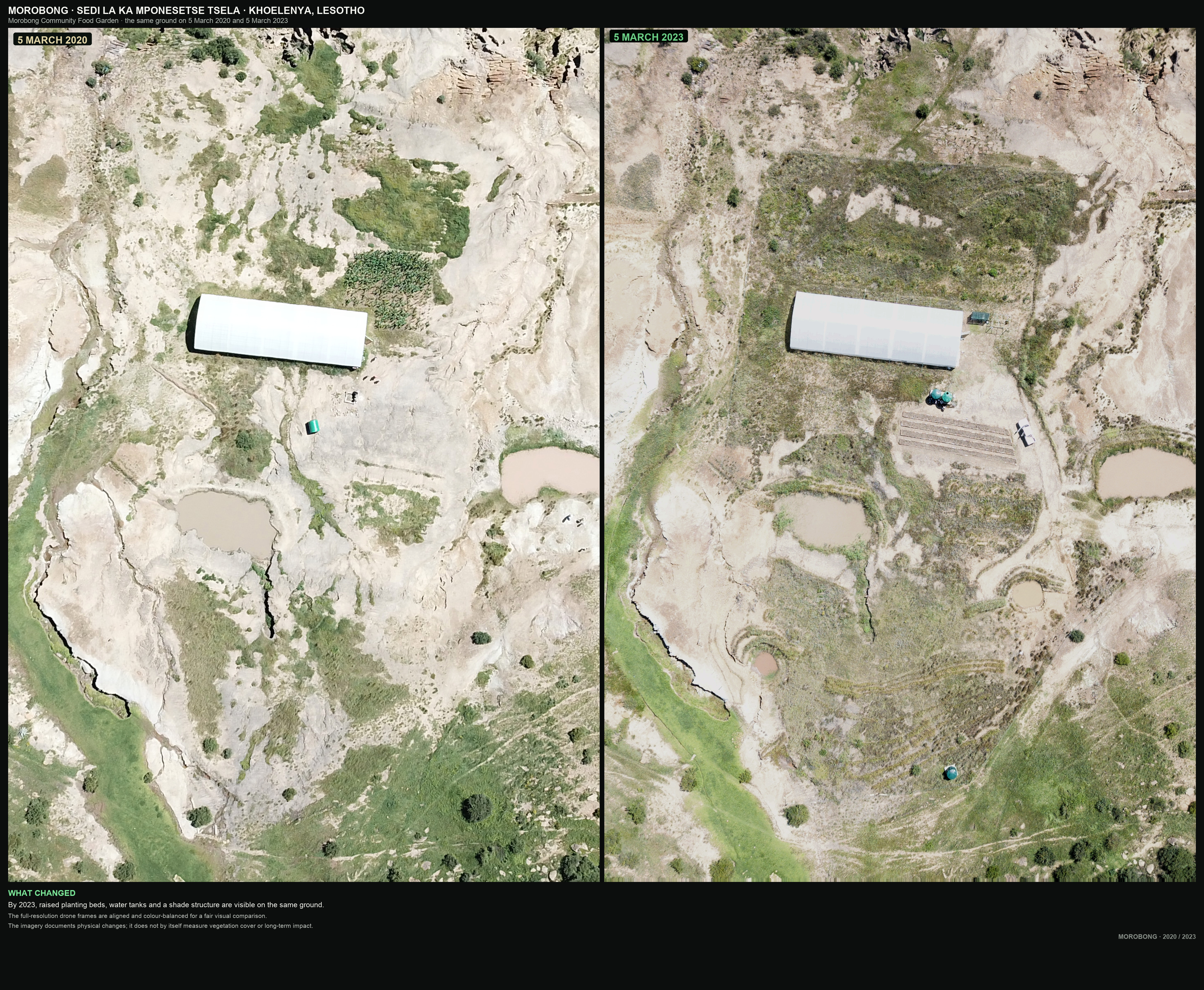
Before & after · Morobong

Morobong garden in 2020 and 2023.

Aerial photographs from 5 March 2020 and 5 March 2023. The later record shows raised beds, water tanks and a shade structure.

Aerial comparison of Morobong Community Food Garden in Lesotho, showing the site in March 2020 and March 2023
BEFORE · 5 MARCH 2020Morobong Community Food Garden · LesothoAFTER · 5 MARCH 2023

Monitoring & evaluation · Google Earth

Garden plans, aerial surveys and field records.

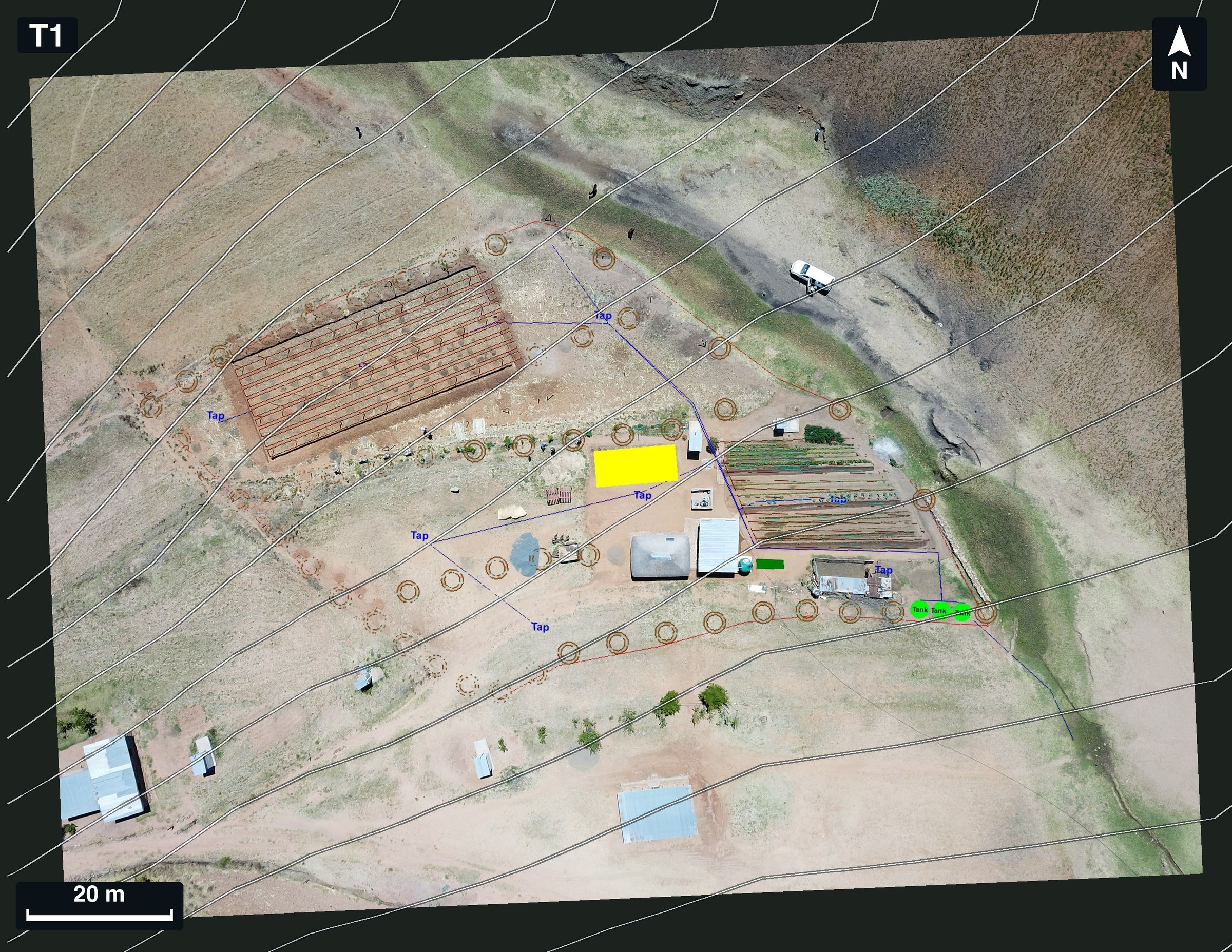
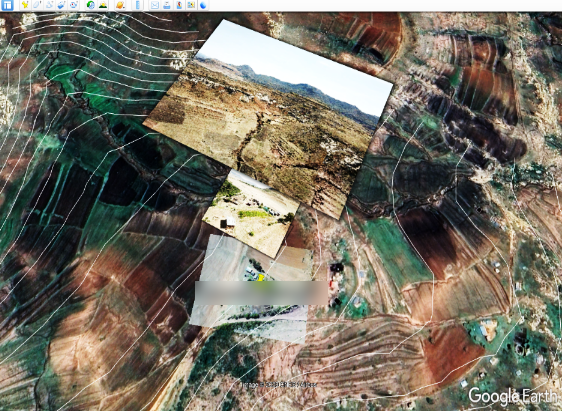
The Google Earth database brought together CAD drawings, interviews, aerial photographs and video links for each garden. It supported site maps and comparison of aerial surveys from different seasons. These maps come from the September 2021 database.

Drone orthophoto of garden T1 in Lesotho with the concept drawing and contour lines drawn over it: a hatched block of beds, rows of circles for tree basins, tap labels, a pipe run and small buildings, with a 20 m scale bar and a north arrow
Garden T1 · Thaba Mokhele. Aerial survey with the garden concept drawing and contours · September 2021 database.
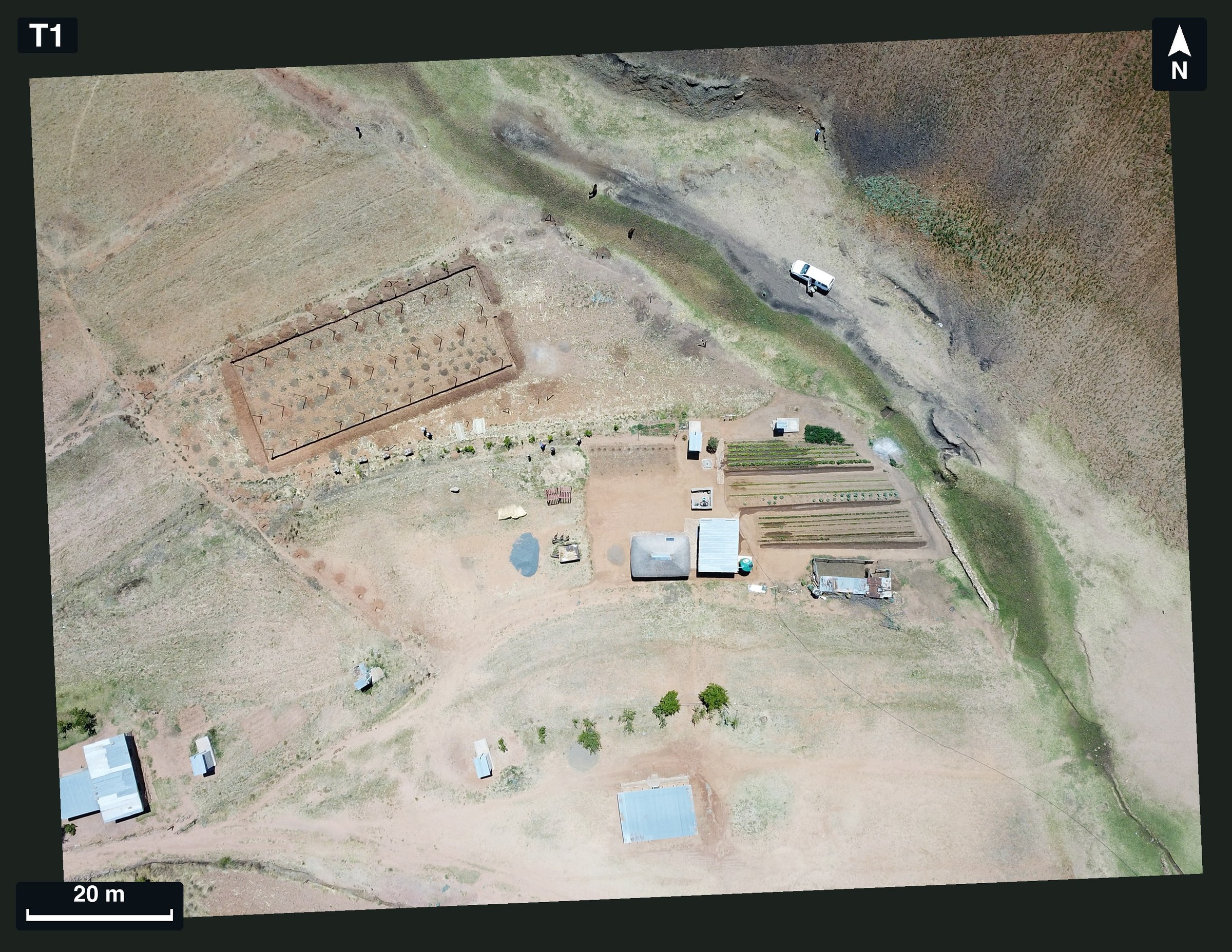
Drone orthophoto of garden T1 on its own: a prepared block of beds, small buildings and a stream line with green growth along it
Garden T1 · Thaba Mokhele aerial survey.
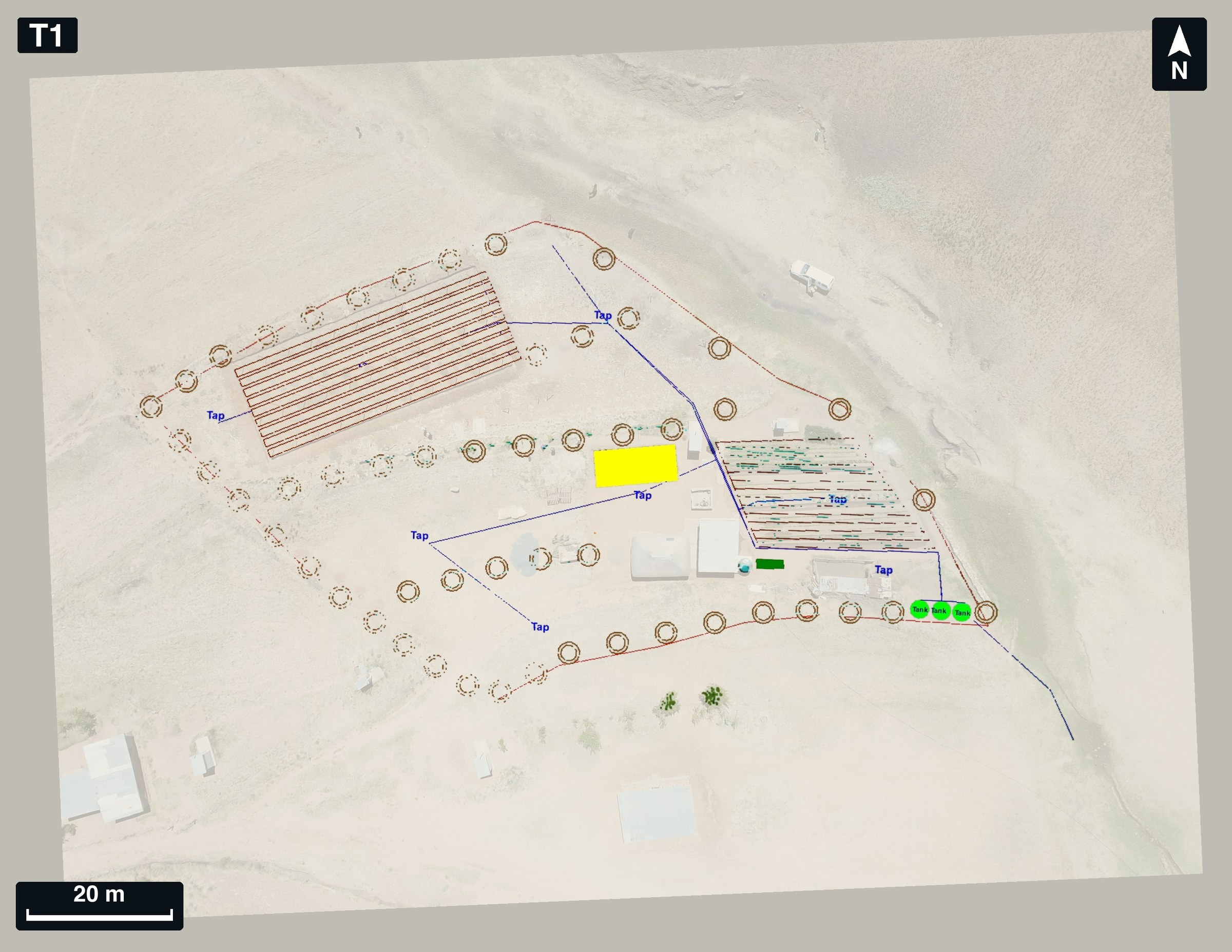
The T1 concept drawing as line work on a plain ground: a hatched bed block, rows of circles for tree basins, tap labels and a pipe run
Garden T1 concept drawing · vegetable beds, tree basins, taps and water pipe.
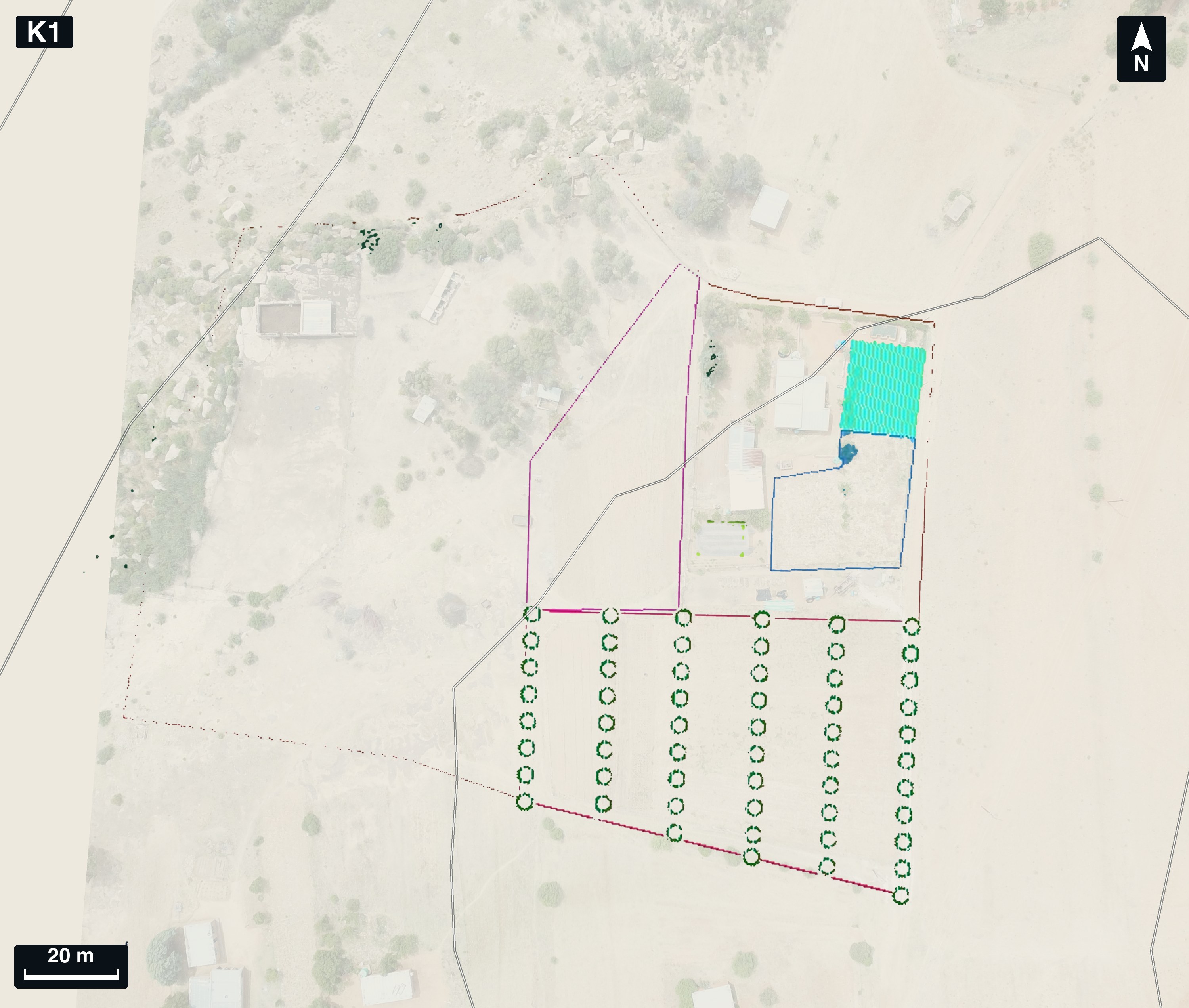
The K1 demonstration-garden drawing as line work over a faint drone footprint: six rows of tree basins drawn as circles, a hatched tank, house outlines, a pipe run and the boundary, with a 20 m scale bar and a north arrow
Garden K1 · Khoelenya demonstration garden. Tree rows, water tank, pipe and boundary in the concept drawing.
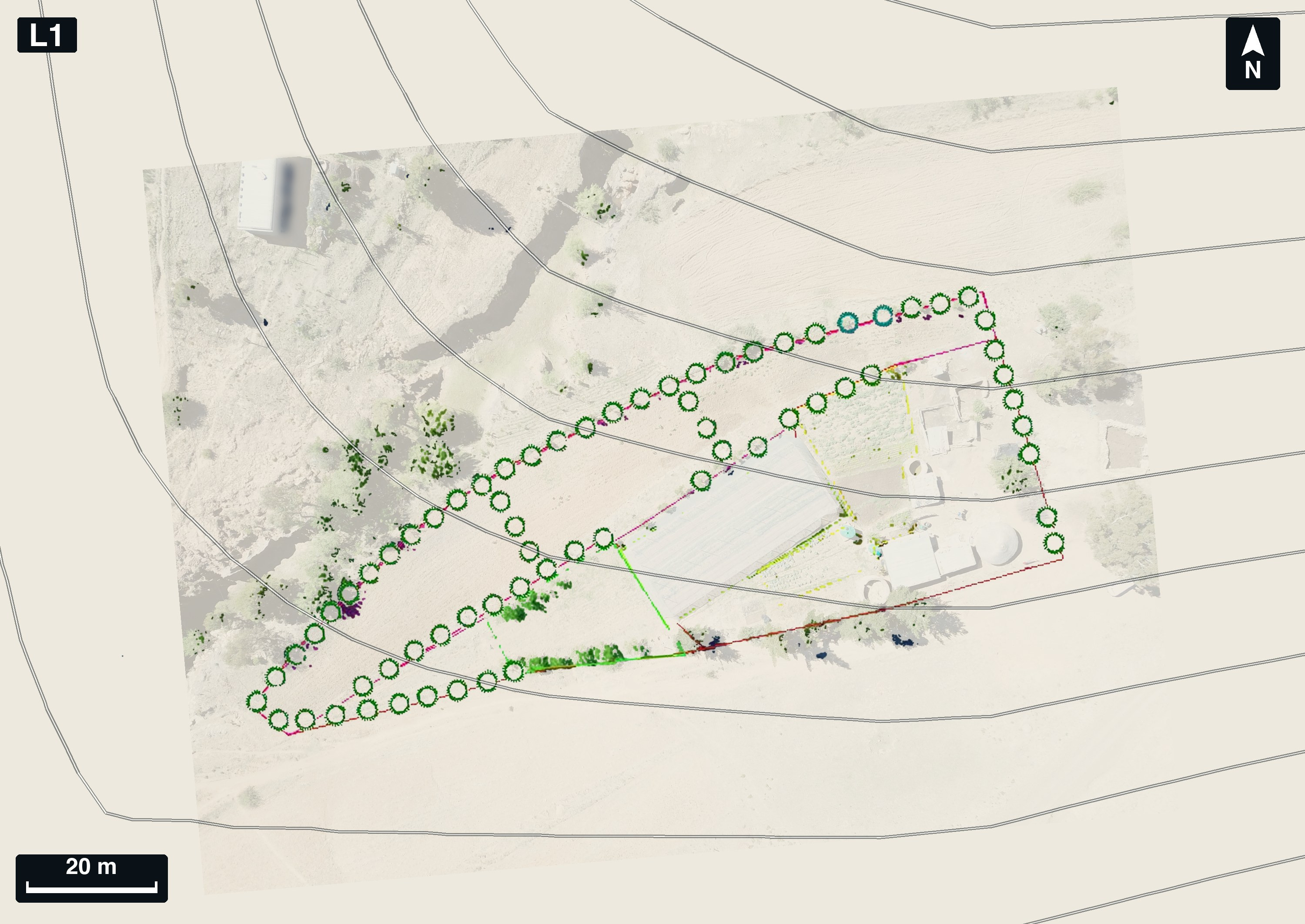
The L1 demonstration-garden drawing as line work over a faint drone footprint: a ring of tree basins around the boundary, inner tree rows, bed blocks and a tank, with a 20 m scale bar and a north arrow
Garden L1 · Lithipeng demonstration garden. Tree basins around the boundary, inner rows and the bed blocks.
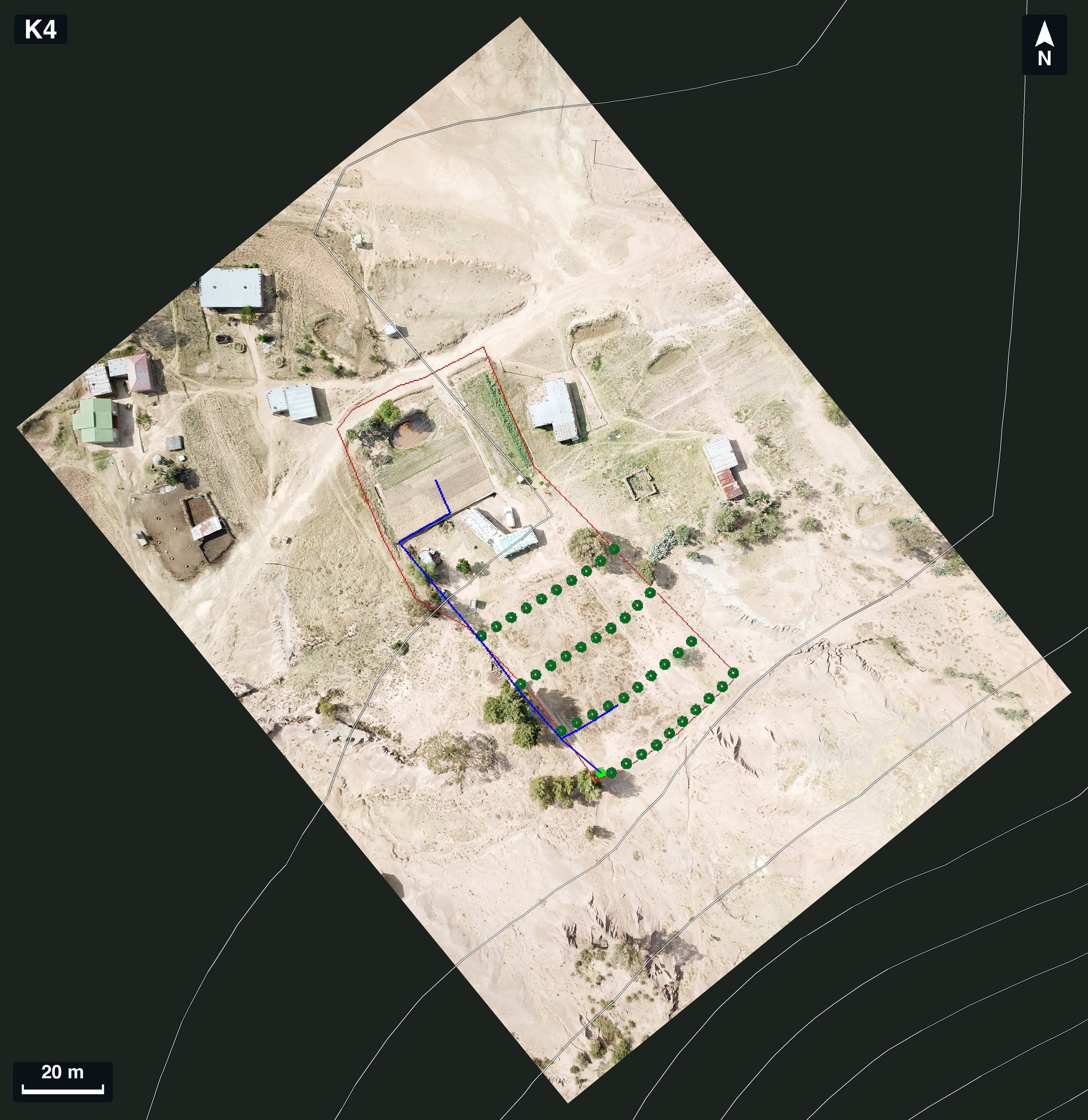
Drone orthophoto of garden K4 with a red boundary, a blue pipe run and rows of green tree markers drawn over it, houses around the site and contour lines across the frame
Garden K4 · Khoelenya. Boundary, pipe run and tree rows over the orthophoto, with contours.
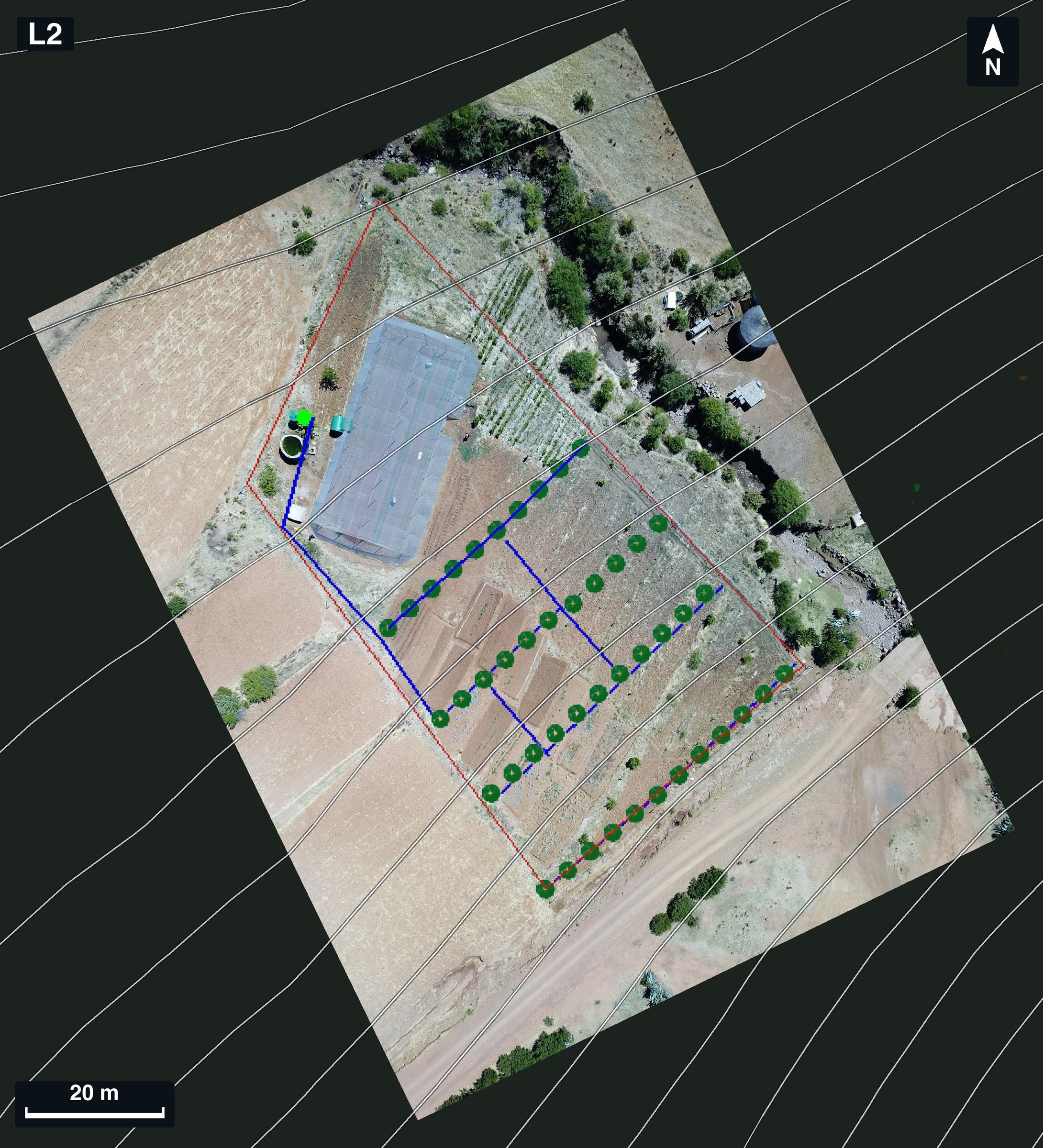
Drone orthophoto of garden L2 with rows of green tree markers, blue drip lines, a red boundary and a tank symbol drawn over it, a large roofed structure in the middle and contour lines across the frame
Garden L2 · Lithipeng. Tree rows, drip lines and the tank connection over the orthophoto, with contours.
19
garden folders in the September 2021 build, across Thaba Mokhele, Khoelenya and Lithipeng
15
drone orthophotos placed on the ground they were flown over
12
CAD concept drawings, drawn over the orthophotos
496
contour lines
27
photographs pinned to their gardens
3
drone fly-over video links
Screenshot from the close-out report of the Google Earth database: a garden’s drone photographs and concept drawing overlaid on satellite imagery with contour lines, the Google Earth mark at the bottom right
Garden mapping in Google Earth · Figure 5, RVCC close-out report, October 2021. Beneficiary name obscured for privacy.

Maps combine aerial surveys and concept drawings at their recorded locations, with gardens labelled by programme ID. Design sheets from this and other programmes are on the Designs page.

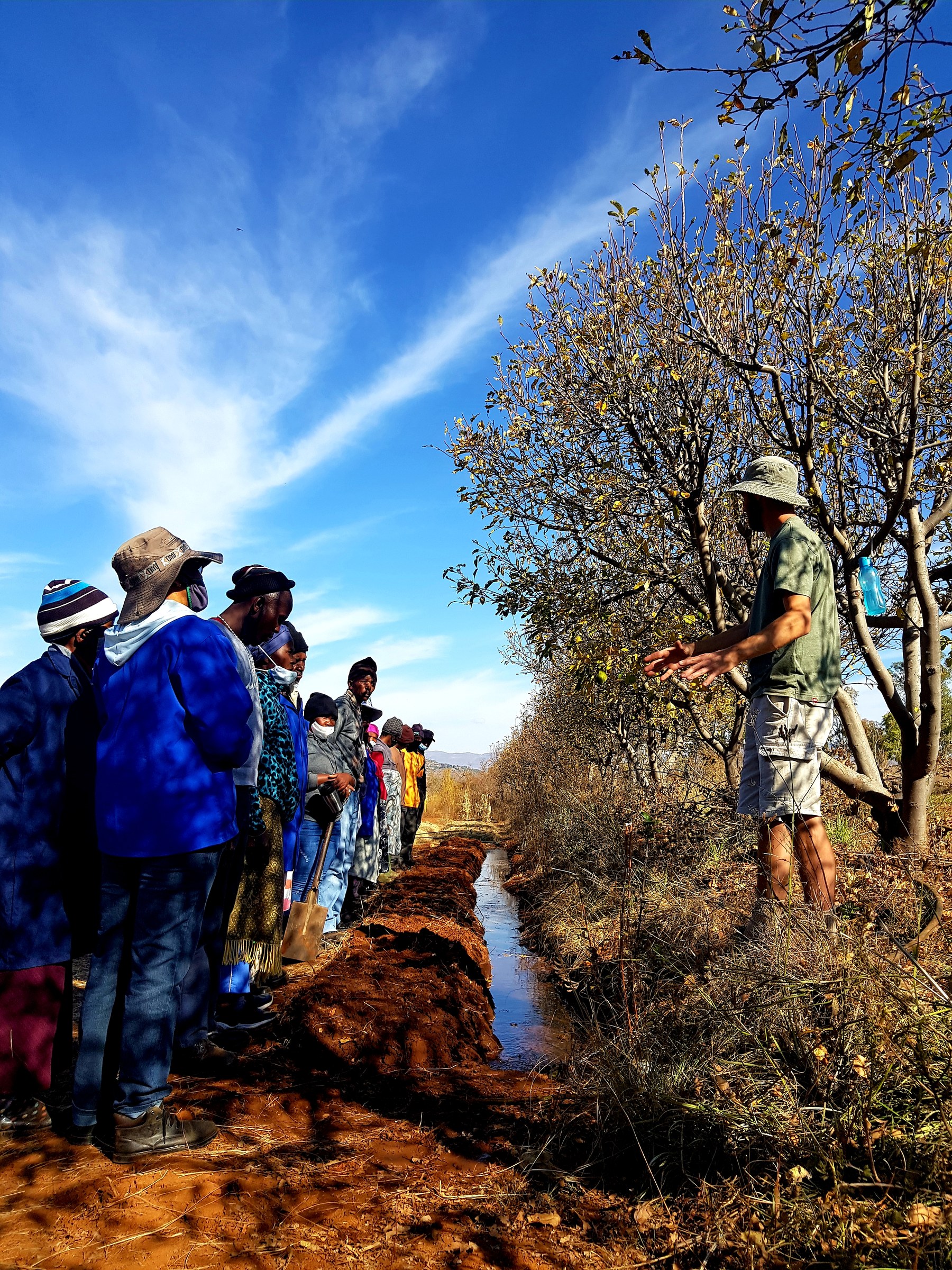
Earthworks in the rain

Seeing the earthworks during rainfall.

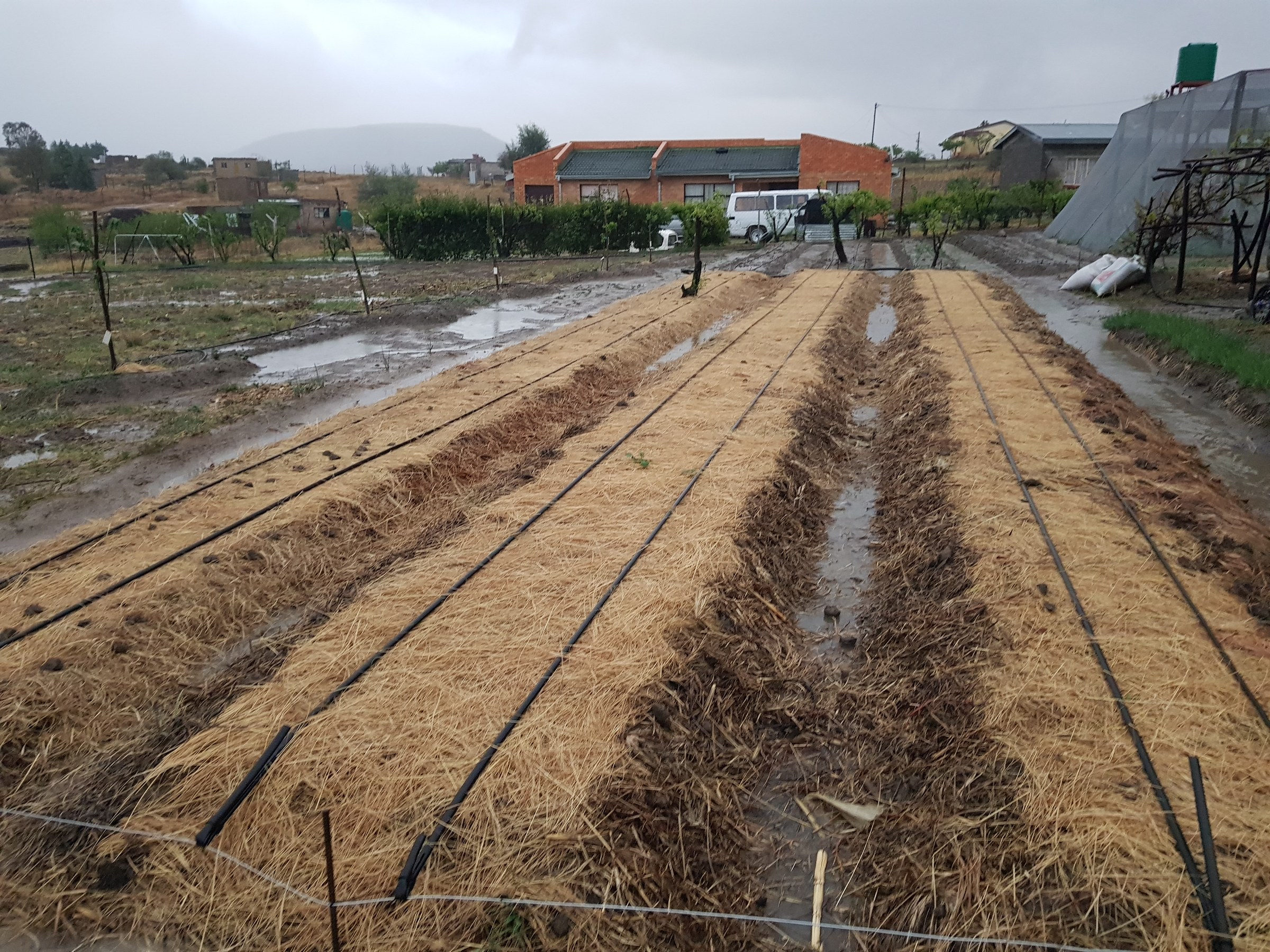
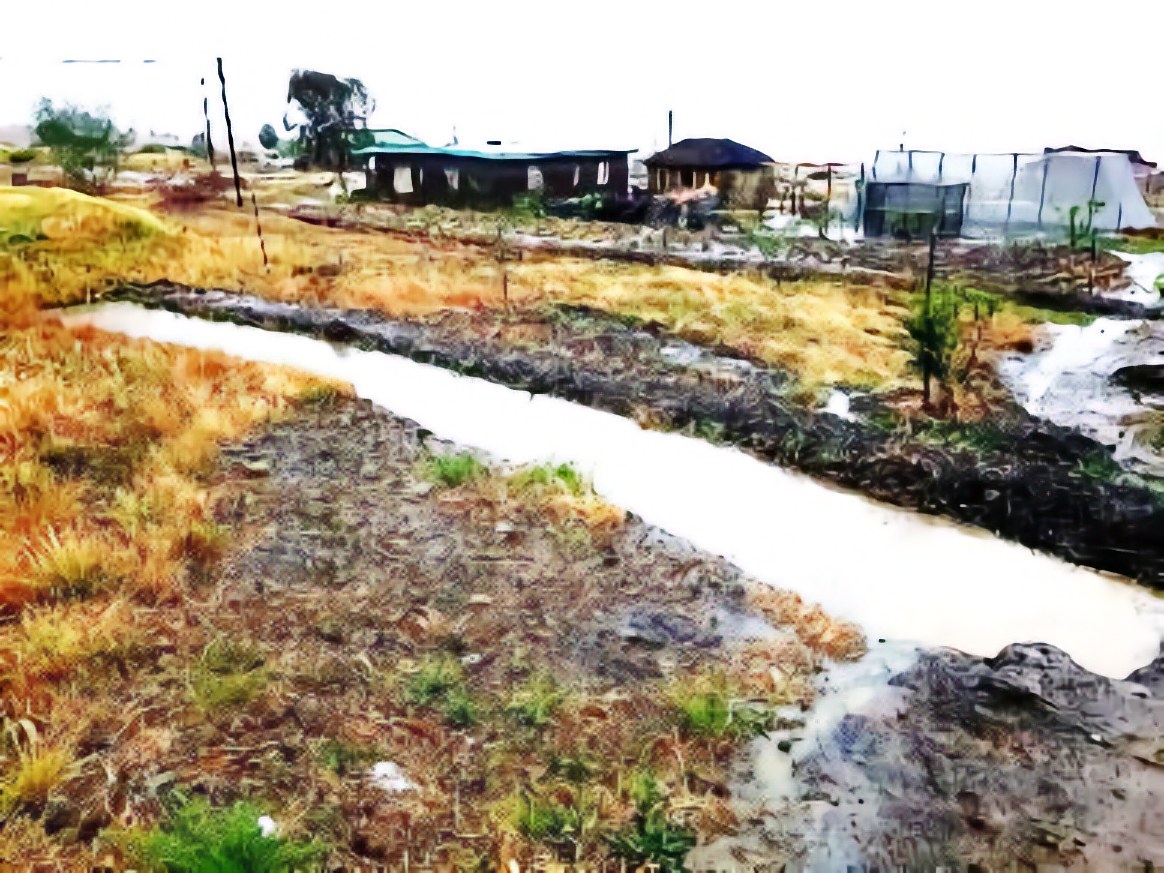
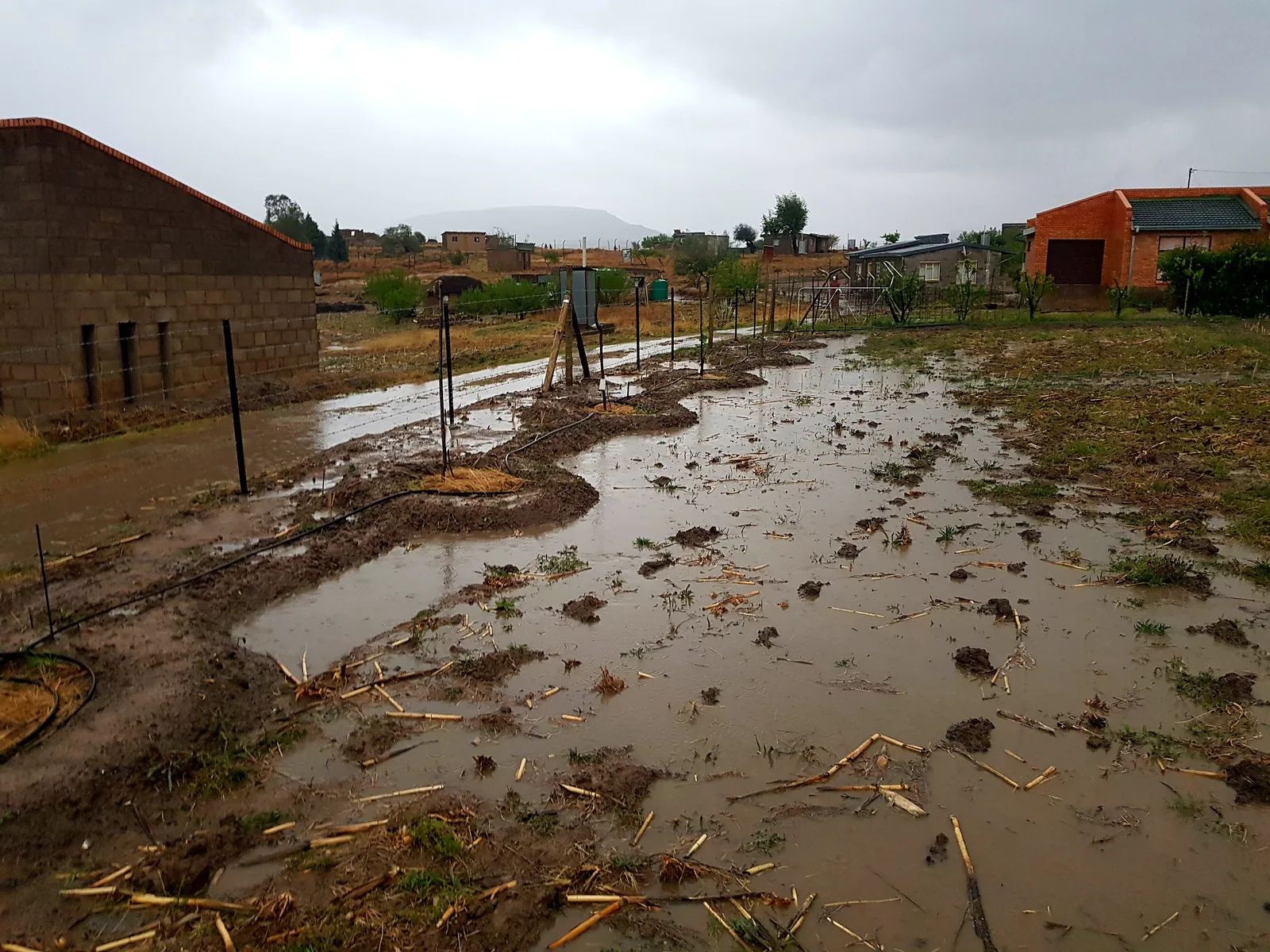
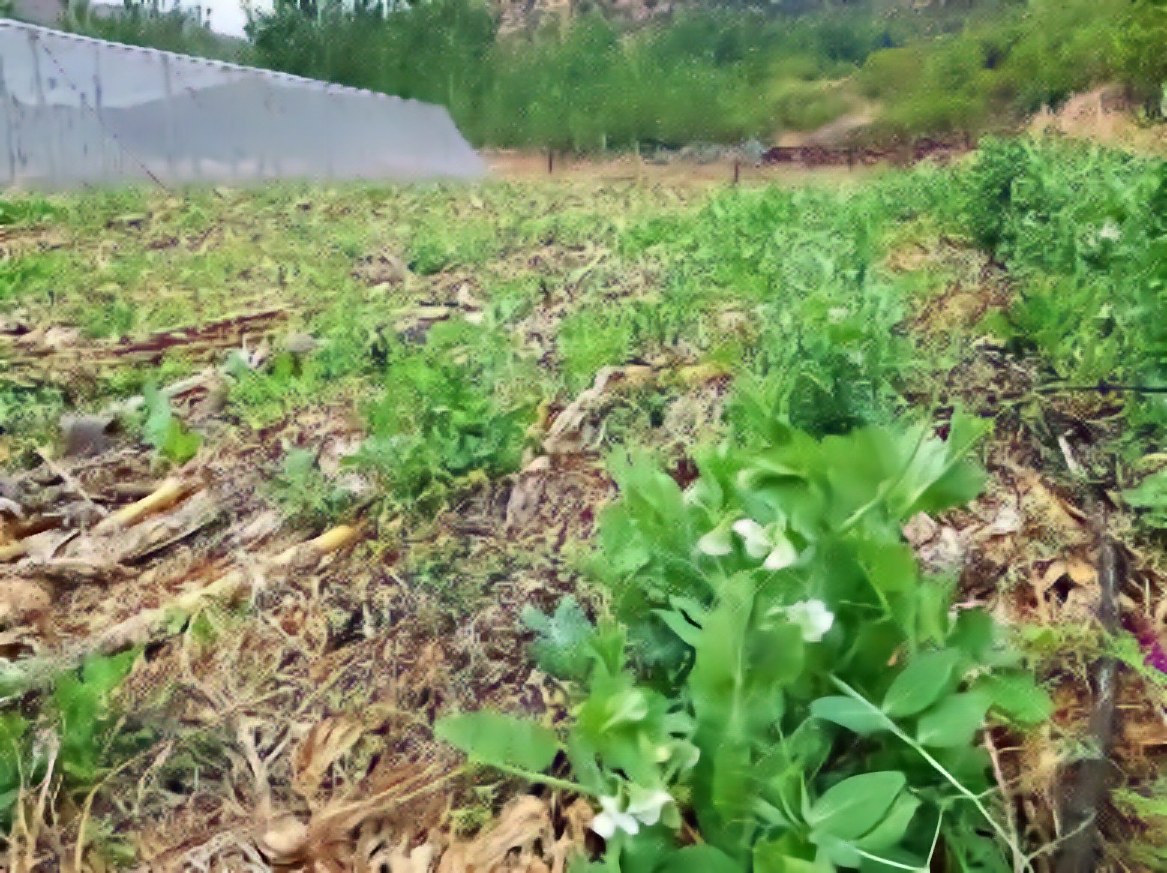
Rainwater between mulched raised beds, beside drip lines and across planted fields during Lesotho programme visits. The closeout report includes these observations of water movement on the sites.
Long mulched raised beds with black drip lines and rainwater visible in the channels and surrounding paths
Raised-bed recordMulched raised beds and drip lines, with water visible between and around the beds · closeout report, Figure 9
Wet growing area with pale rainwater moving through channels between planted ground and a greenhouse
Closeout visitWater visible across the growing area during heavy rain · Maitumeleng Mabaka, closeout report, Figure 33
Wet field with standing water around planted rows, young trees and black irrigation lines beneath a grey sky
Field recordA wider view of planted rows, irrigation lines and standing water · Lesotho programme archive

Animal housing · before and after the intervention

From crowded cages to shelter and space to forage.

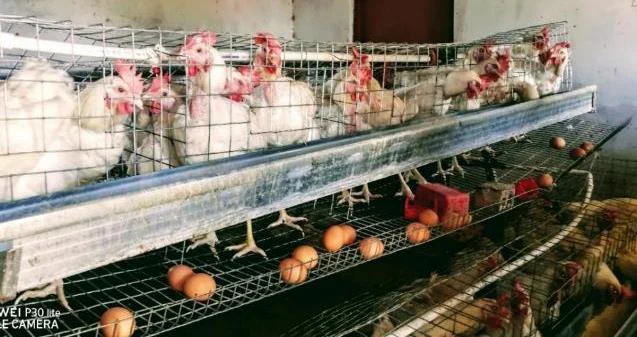
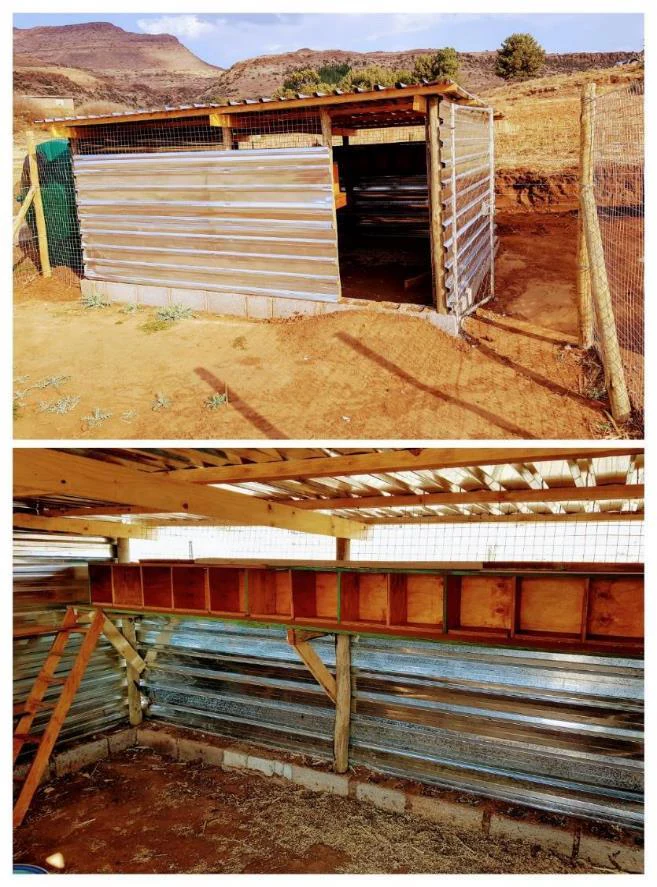
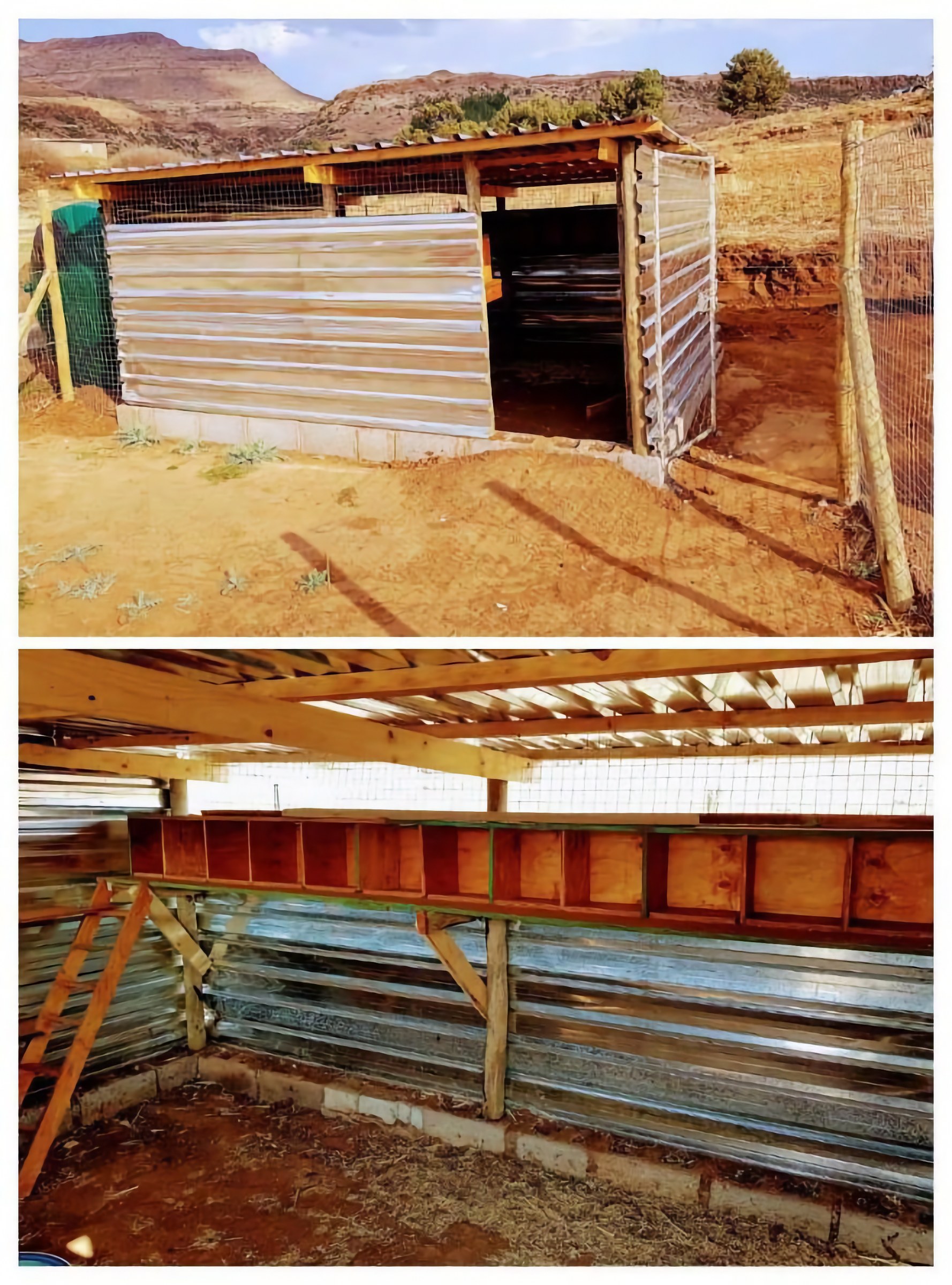
The RVCC closeout report records overcrowded battery cages at one garden before the project. The programme built chicken coops with fenced outdoor runs at three demonstration gardens, and mobile chicken tractors for 13 homestead gardens.
Chickens confined in rows of wire battery cages, with eggs visible on collection trays
Before · starting conditionsOvercrowded battery cages at a project garden. Figure 14, report p. 34.

Housing connected to the garden.

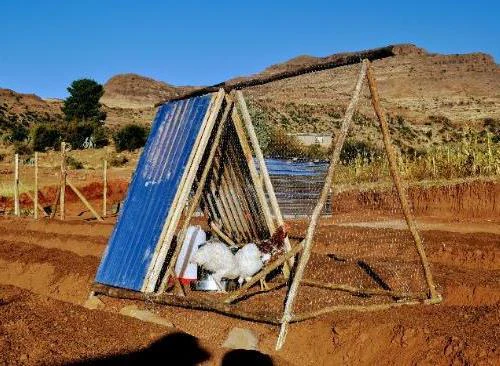
The new structures provided shelter, raised nesting boxes and fenced outdoor areas for chickens to free-range. Mobile A-frame coops allowed chickens to forage where the structure was placed. The wider work also included pens and fenced runs for pigs, sheep and goats, water access, fodder crops and husbandry training.

Examples of animal-housing conditions and structures across the RVCC programme.

Exterior and interior of a new chicken coop, showing a fenced outdoor run and raised nesting boxes
After · structures builtA newly constructed coop, outside and inside. Coops with fenced runs were built at the three demonstration gardens. Figure 15, report p. 35.
Chickens beneath an A-frame mobile coop and wire run positioned over a raised garden bed
Mobile chicken tractor · Figure 16, report p. 36

At homestead scale

Move the shelter with the work.

The report records mobile A-frame chicken tractors for all 13 homestead permaculture gardens.

Read the animal-housing record (PDF, opens in a new tab)

Photographs: Rory Clark, 2020. Closeout report pp. 34–36 and section 4.7.12, p. 79.
Pig housing · Lesotho, 2021

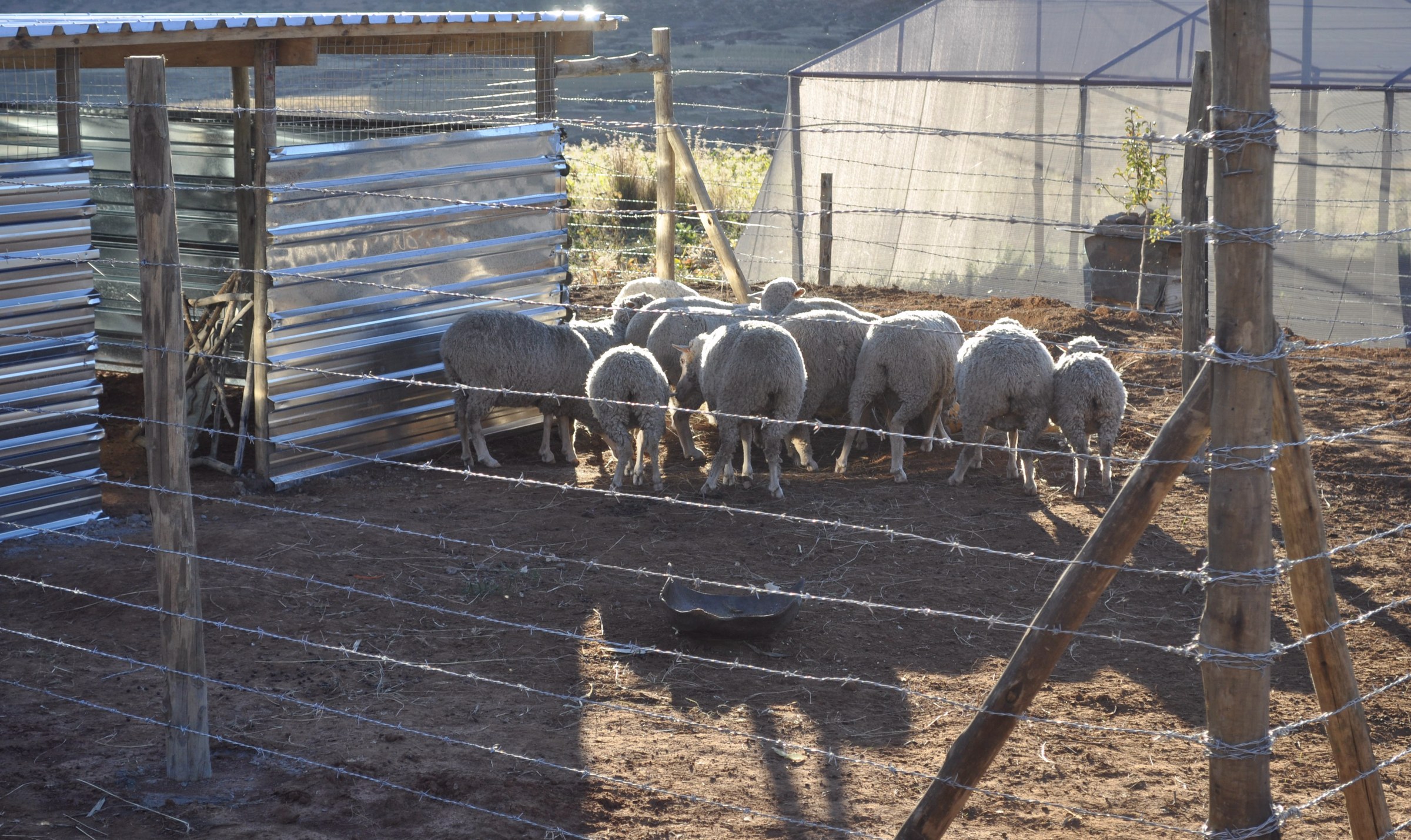
Better shelter, room to move.

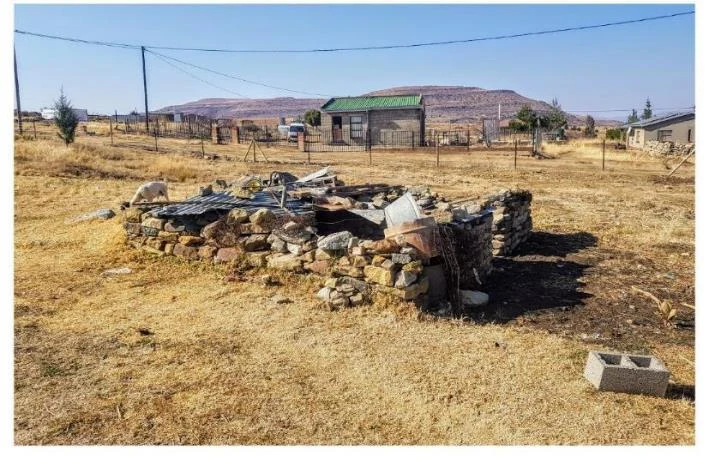
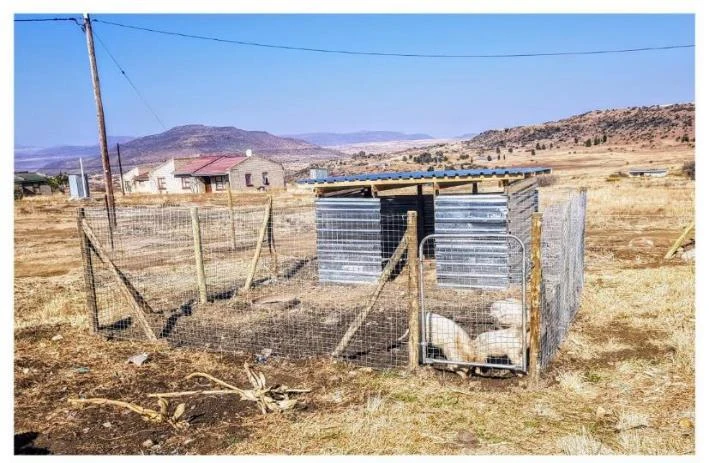
The project replaced dilapidated shelters with durable housing and fenced outdoor runs. Pig and sheep pens were built at the three demonstration gardens, using gum poles and roof sheeting.

A low stone pig shelter with loose sheets and timber across its roof
Before · dilapidated shelterA former shelter recorded in the closeout report as having been replaced. Figure 19, report p. 37.
Pigs in a fenced outdoor run beside a newly built timber and corrugated-metal shelter
After · new pig pen and runA newly constructed shelter and fenced area for pigs to move outdoors. Figure 18, report p. 37.

Photographs: Rory Clark, 2021. Examples of housing changes across the RVCC programme.

See the pig-housing photographs in the report (PDF, opens in a new tab)

Learning in the field

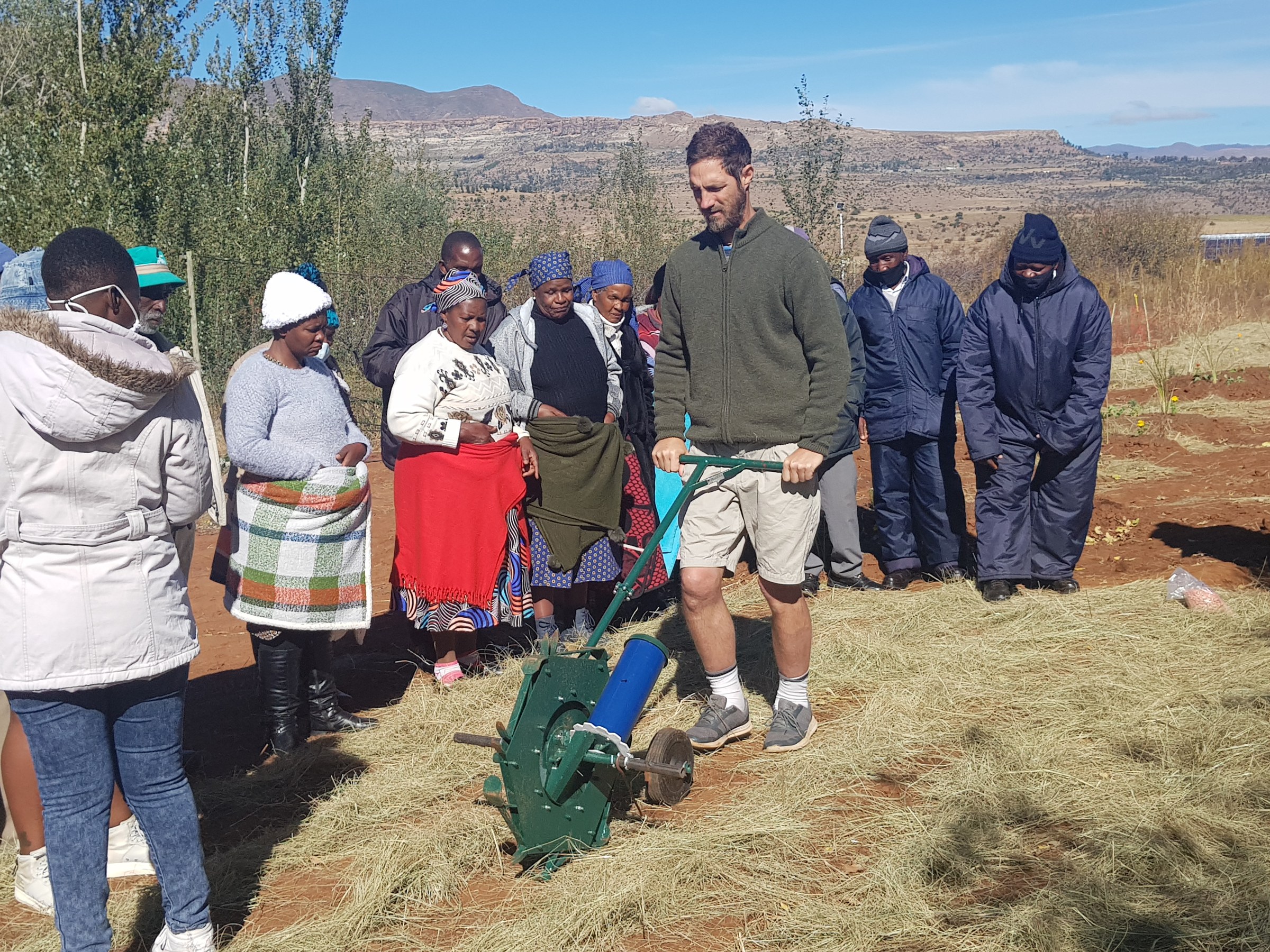
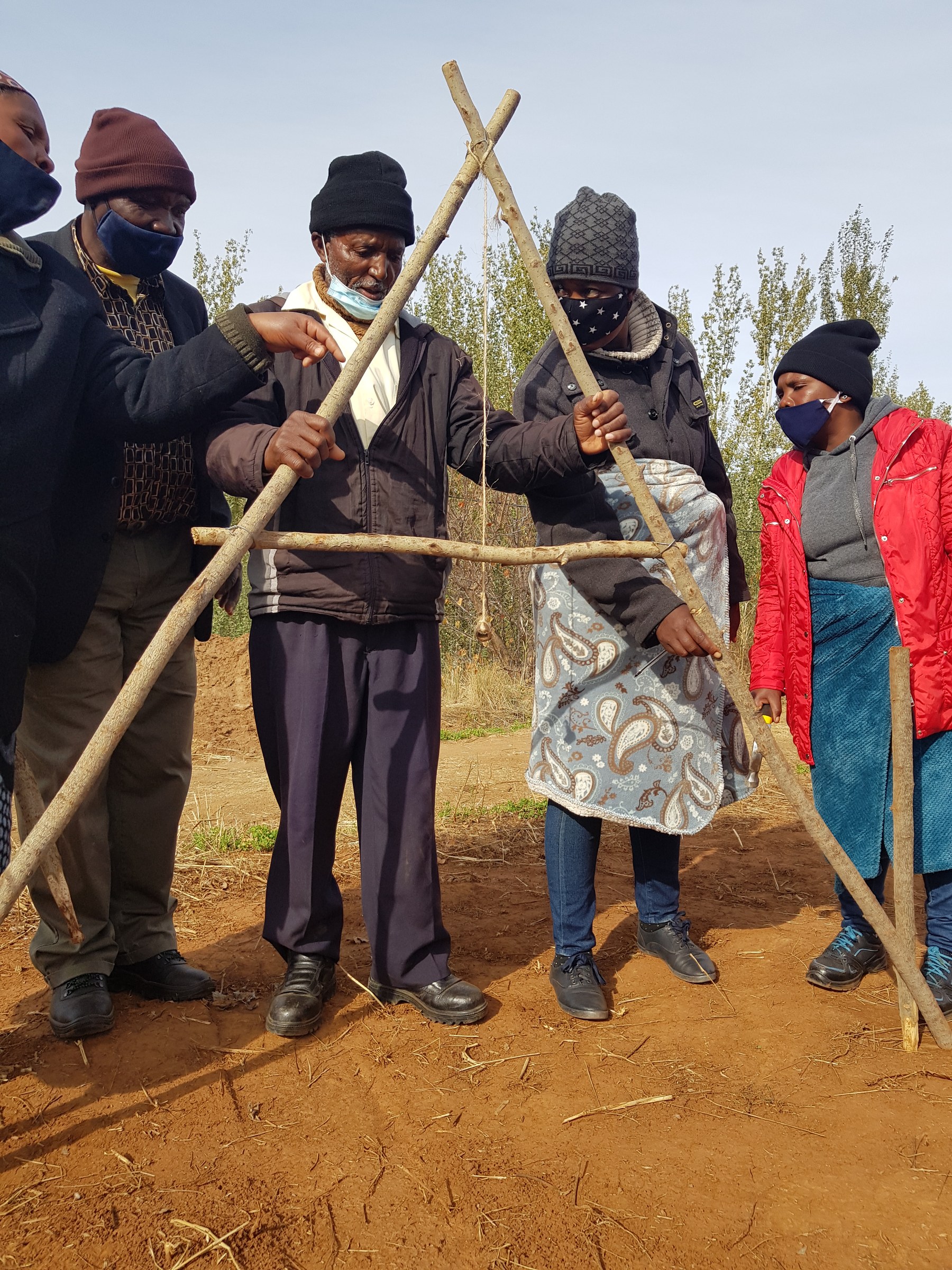
Minimum tillage and tree-planting demonstrations.

Lesotho programme photographs showing practical instruction in minimum tillage and agroforestry / food-forest establishment.

Rory Clark demonstrating a manual minimum-tillage implement to a group of participants in a mulched Lesotho field
Minimum-tillage equipment demonstration · Lesotho
Rory Clark explaining the planting sequence with members of the Lesotho field team beside newly prepared tree basins
Planting sequence explained with the field team · Lesotho

Lesotho · March 2023

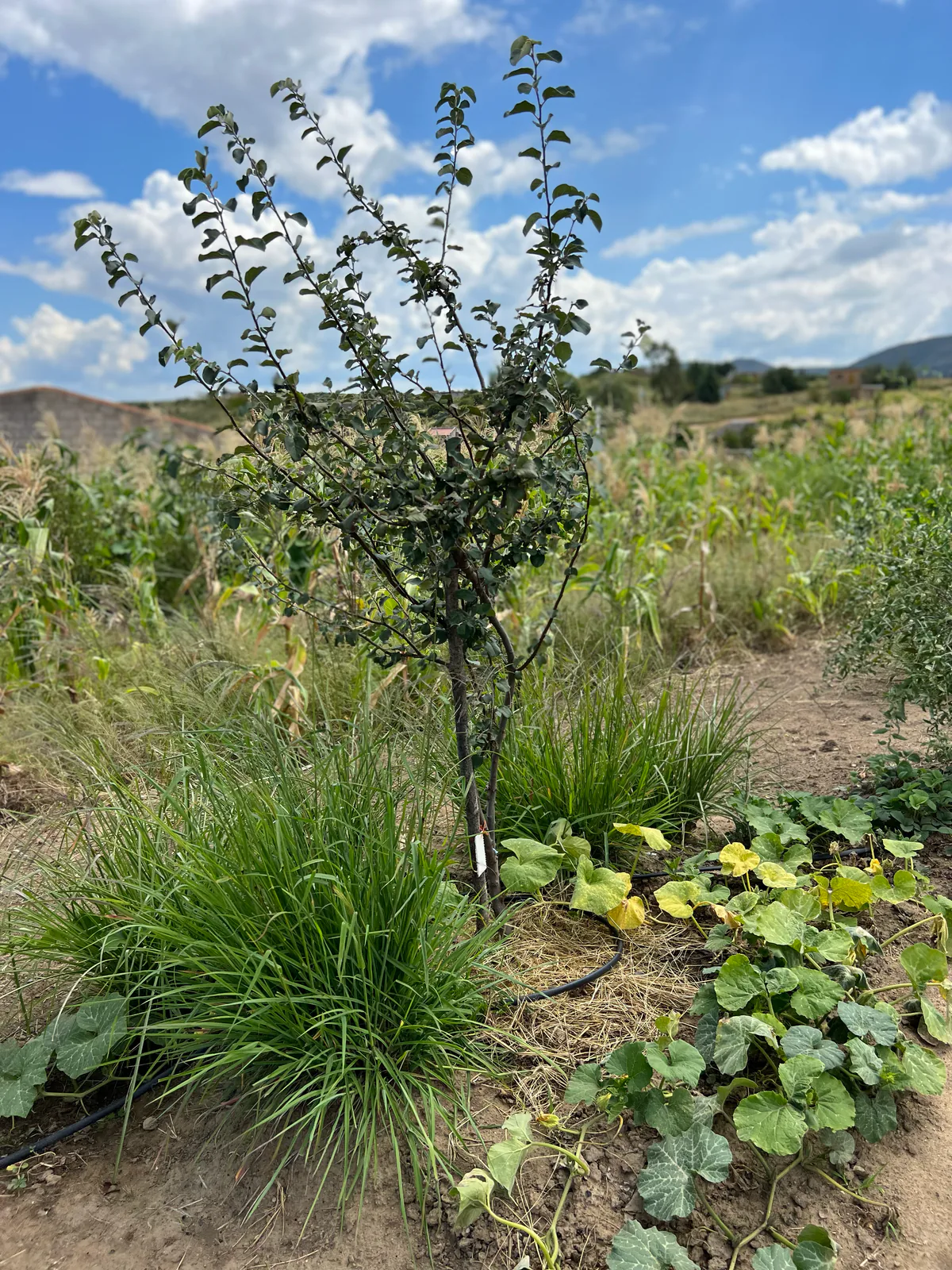
Trees, groundcover and irrigated crops.

Tree planting formed part of the Lesotho programme alongside food production, soil care and water management. This photograph records a garden in March 2023, after the 2020–2021 assignment.

Grass clumps and groundcover surround the young tree. Mulch and an irrigation line are visible at its base, with maize growing behind.

Explore practical training
A tree growing among dense grass clumps and broad-leaved groundcover, with an irrigation line at its base and maize behind
Tree planting within a mixed garden · Lesotho · 5 March 2023

No-till in practice · Lesotho

Working through the crop residue.

A participant works a hand-operated planter through a bed covered in crop residue during practical training in Lesotho.

No-till planter demonstration · 11 May 2021 · 12 seconds
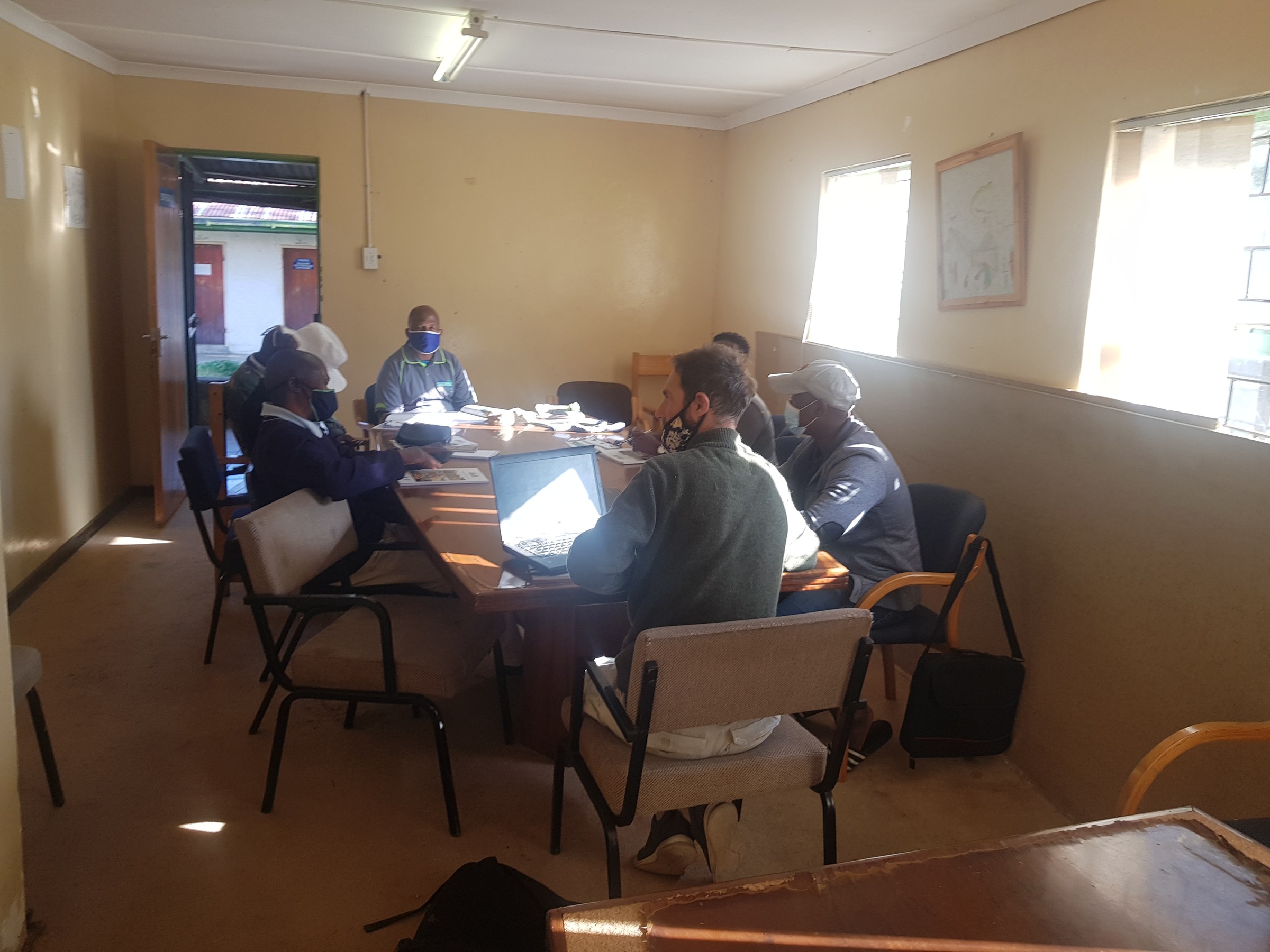
Rory Clark in a working session around a table with Lesotho government officials
Government working session · Lesotho programme archive

Institutional delivery

Government supervision and training resources.

The assignment included terms of reference for six supervisors, a permaculture manual, national guidance and working sessions with government officials and programme teams.

Closeout output register

What the assignment delivered, in full.

Figures below come from the RVCC Permaculture Project Close-out Report, dated 30 September 2021 and finalised as an October 2021 PDF.

01

Training & institutional delivery

3
five-day permaculture courses
60
people trained on the five-day courses
5
community permaculture open days
130
open-day participants
190
people trained in total, against a target of 80
6
youth agricultural graduates deployed as supervisors
111 pages
handbook length recorded at closeout; the surviving June 2020 PDF has 100 pages
100
printed handbook copies
4 resources
Farmer Field School curriculum integration, sowing calendar, national guidelines and policy brief
02

Sites, water & access

20 gardens
12 homesteads, 7 community gardens and 1 Ministry district-office site; 3 of the 20 also served as demonstration sites
26 × 5,000 L
water tanks with 26 brick-and-mortar stands
40
taps and tap stands
2,400 m
25 mm pipe connecting tap stands
8,380 m
16 mm drip-irrigation line
1,695 m
40 mm irrigation feedline
3,750 m
40 mm HDPE pipe connecting sites to water sources
2,318 m
perimeter fencing installed at 10 gardens
20 gates
10 driveway and 10 pedestrian gates
Site earthworks
swales, raised vegetable beds, tree basins, staple-crop plots, driveways, cleared fence lines and levelled animal-shelter areas
03

Trees, perennial crops & nurseries

745
fruit and nut trees across 30 varieties
161
indigenous trees across 10 varieties
906
trees planted in total
1,232
berry and vine plants across 8 varieties
553
herb and support plants across 10 varieties
13,000
vetiver plants for erosion control, mulch and fodder
20
mini seedling nurseries
200
200-cell propagation trays
22
98-cell seedling trays
43
open propagation trays in two sizes
45 packs
plant bags, plus rooting hormone, labels and markers
24
grape trellises
04

Seed, soil & growing inputs

20
seed hampers, plus surplus seed shared at open days
40 + 2 + 9
vegetable, fruit-seed and cover-crop / forage varieties listed in the detailed supply narrative
3,010
50 kg bags of compost
206
10 kg bags of potting soil
72
10 kg bags of seedling compost
25
coco / peat bales
109
hay bales
104 units
organic fertiliser products, including seedling, growth, vegetable, fruit-and-flower and worm-compost formulations
60 units
organic pest-control products across three formulations
Record tools
kitchen scales and bookkeeping sheets for yields, daily income and expenses, and profit or loss
05

Animal systems, tools & implements

3 × 48 m²
new chicken coops and runs at demonstration gardens
340
traditional-breed chickens supplied to 13 homestead gardens
13
mobile A-frame chicken tractors
3
pig and sheep pens, with solar animal fencing at the demonstration gardens
62
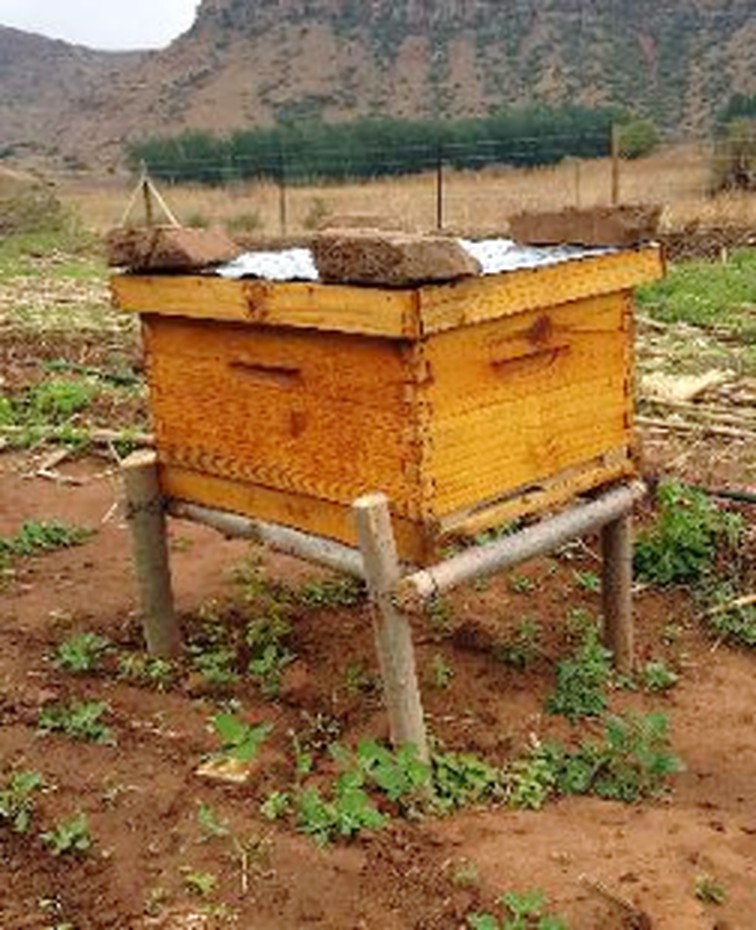
beehives with protective suits and tools
9
honey extractors
Tool sets
31 wheelbarrows; 43 each of spades, four-prong forks, picks, hoes and hand shovels; 56 watering cans; 20 fencing pliers; 19 each of hoses, crowbars, bow saws, hammers, dibbers and toolboxes; 9 large and 38 small sprayers; and 13 digging chisels
25 planters
6 rolling-punch, 6 fine-seed, 1 ox-drawn no-till maize, 6 spear-punch and 6 seedling-transplanter implements

The seed totals follow the detailed supply section of the report: 40 vegetable, 2 fruit-seed and 9 cover-crop / forage varieties.

Verified delivery

190

people trained on the courses and open days, against a target of 80

20

permaculture gardens established

906

fruit, nut and indigenous trees planted

13,000

vetiver plants established across the sites

Why it matters

The programme linked practical field delivery with the structures needed for continuity: supervisors, demonstration sites, a permaculture manual and national guidance. These resources supported follow-up beyond the initial training.

  • Programme design
  • Training systems
  • Government engagement
  • Technical writing
  • Field facilitation
  • Agroecology

Evidence & interpretation

Sources & evidence

Confirmed programme record

Training and delivery figures come from the RVCC close-out report.

Primary programme record

RVCC close-out report, October 2021, used to verify dates, training, gardens, supervisor roles and national guidance.

Field evidence

Lesotho programme photographs from Rory’s own archive, and the named Morobong Community Food Garden comparison. The March 2023 frame post-dates Rory’s 2020–2021 assignment.

Google Earth beneficiary database

Rory’s September 2021 Google Earth database of the programme gardens: drone orthophotos, CAD concept drawings, contours, photographs and fly-over video links filed per garden.

Keep exploring

Read the reports. See the teaching.

Continue exploring

See the full project portfolio.