My fieldwork combines beneficiary interviews, project-participant surveys, baseline assessments and community engagement with site surveys, design, practical training and follow-up visits.
Tatsfield, trading as Mighty Greens · Howick
Tatsfield organic farm, near Howick.
An aerial view of Tatsfield, trading as Mighty Greens, showing production fields, access roads and growing infrastructure on the 80-hectare farm.
Tatsfield / Mighty Greens · Howick · 18 seconds
01
Listen and assess
Interviews, surveys and baseline assessments.
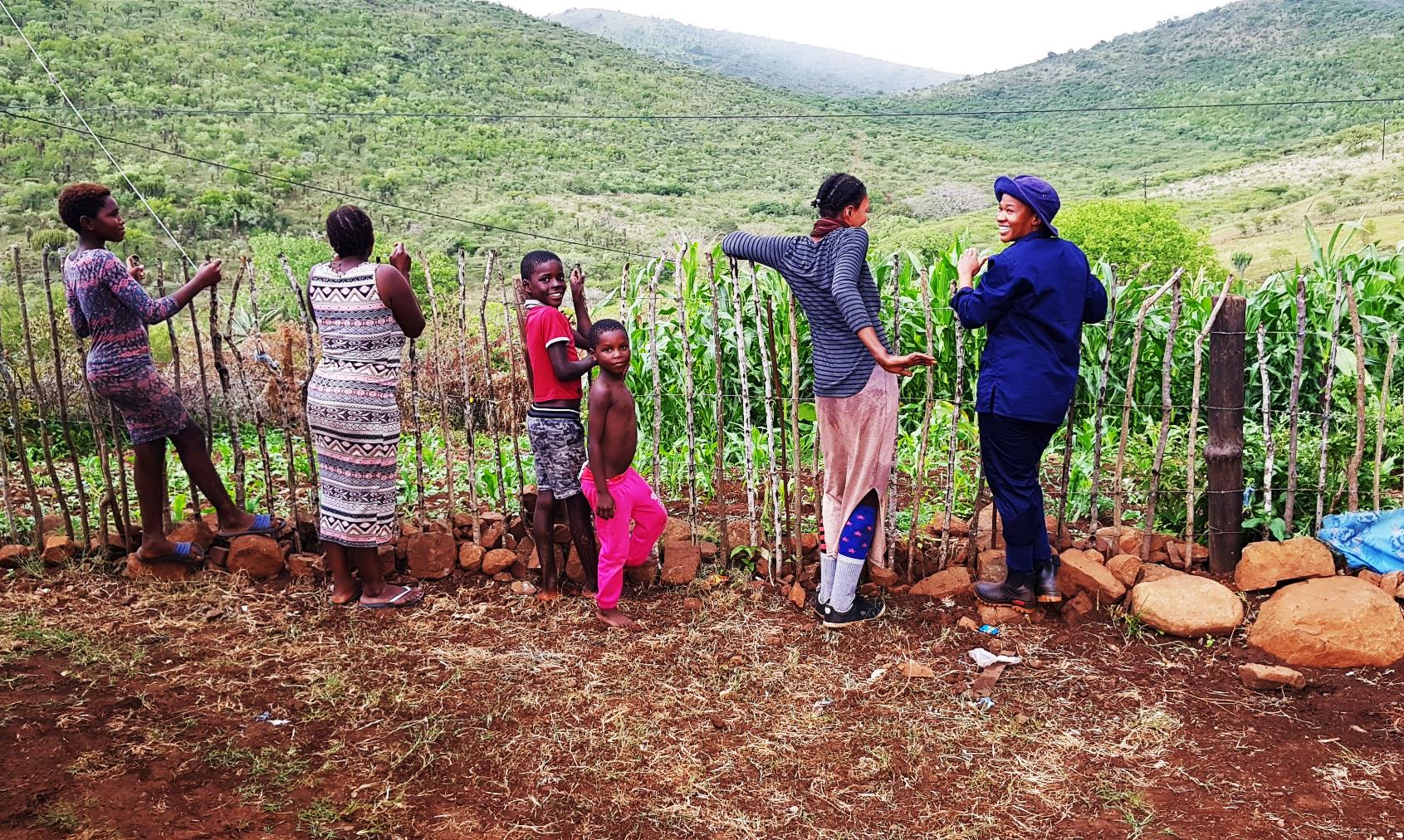
I work with beneficiaries, project participants and community representatives to understand starting conditions and inform programme planning, training and site support.
Beneficiary interviews & participant surveys
Household visits in the Mandlakazi programme helped compile 41 baseline records. Agricultural assessments for ASAP included survey instruments and community-garden visits.
Baseline assessments
The ACT Social Employment Fund field return included twelve garden assessments and a baseline assessment form.
Community engagement
Three community meetings formed part of the Mandlakazi programme’s household baseline work.
Household baseline visit · Mandlakazi programme · December 2020 report
02
Read the site
Measure before drawing.
Contour decisions begin with observation and level information. The working sequence moves from slope reading to site earthworks and then back to verification in the field.
Responsibility
Site reading, level setup and translating field conditions into design decisions.
Documented work
Checking levels beside the excavator connects the survey to the earthworks as they take shape.
Checking levels during earthworks · Rory Clark on site
03
Design the response
Resolve water, movement and planting in one plan.
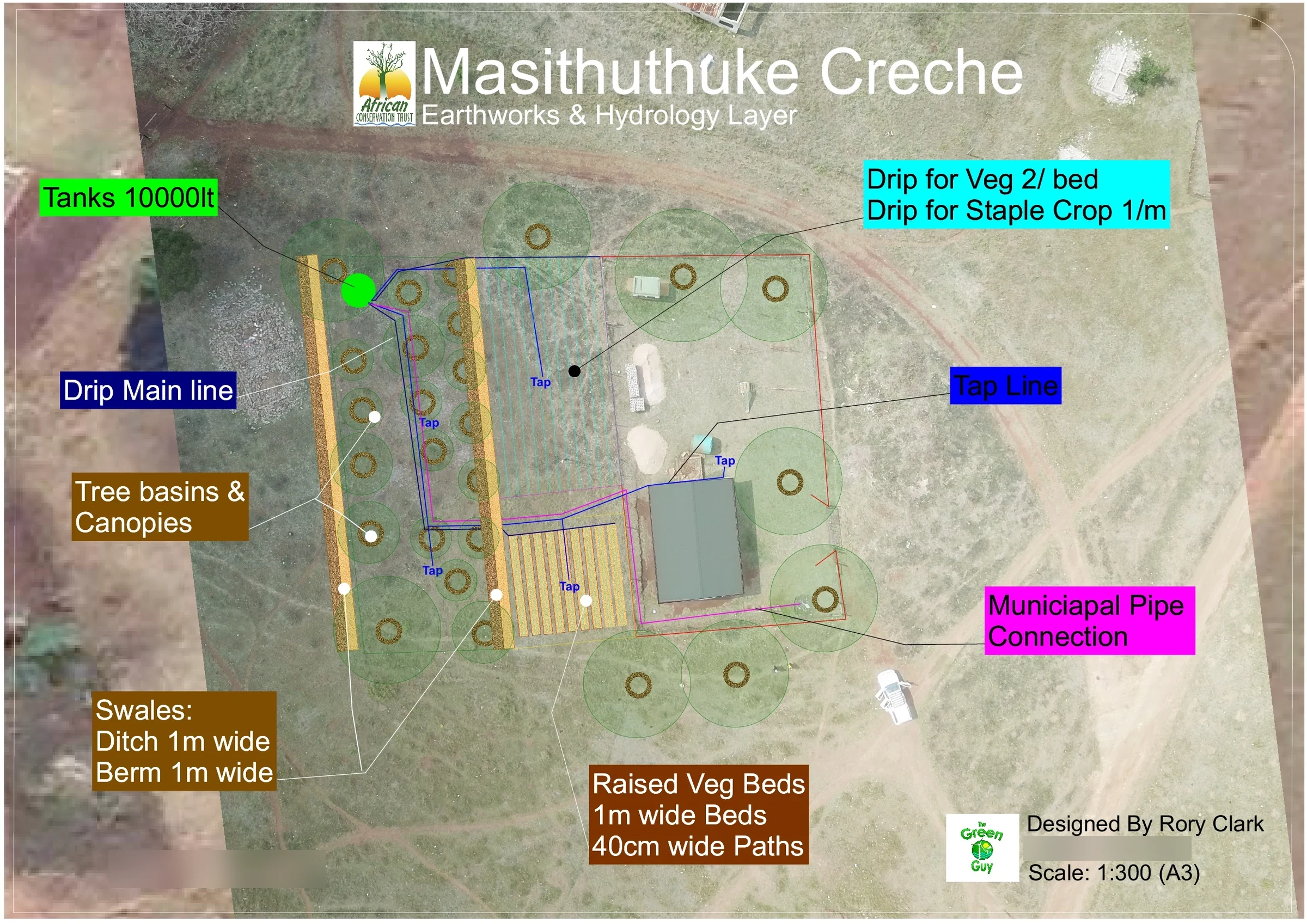
The site plan for Masithuthuke Crèche, part of the Ithala Permaculture Design Project, joins aerial context, hydrology, earthworks, beds and trees. Together, these layers give the field team a coordinated plan for construction and planting.
Responsibility
Site reconnaissance, CAD drawing, implementation logic, written report and budget.
Documented work
Technical synthesis from site conditions to a coordinated implementation plan.
Technical design · December 2020
04
Build with people
Learning by doing, together.
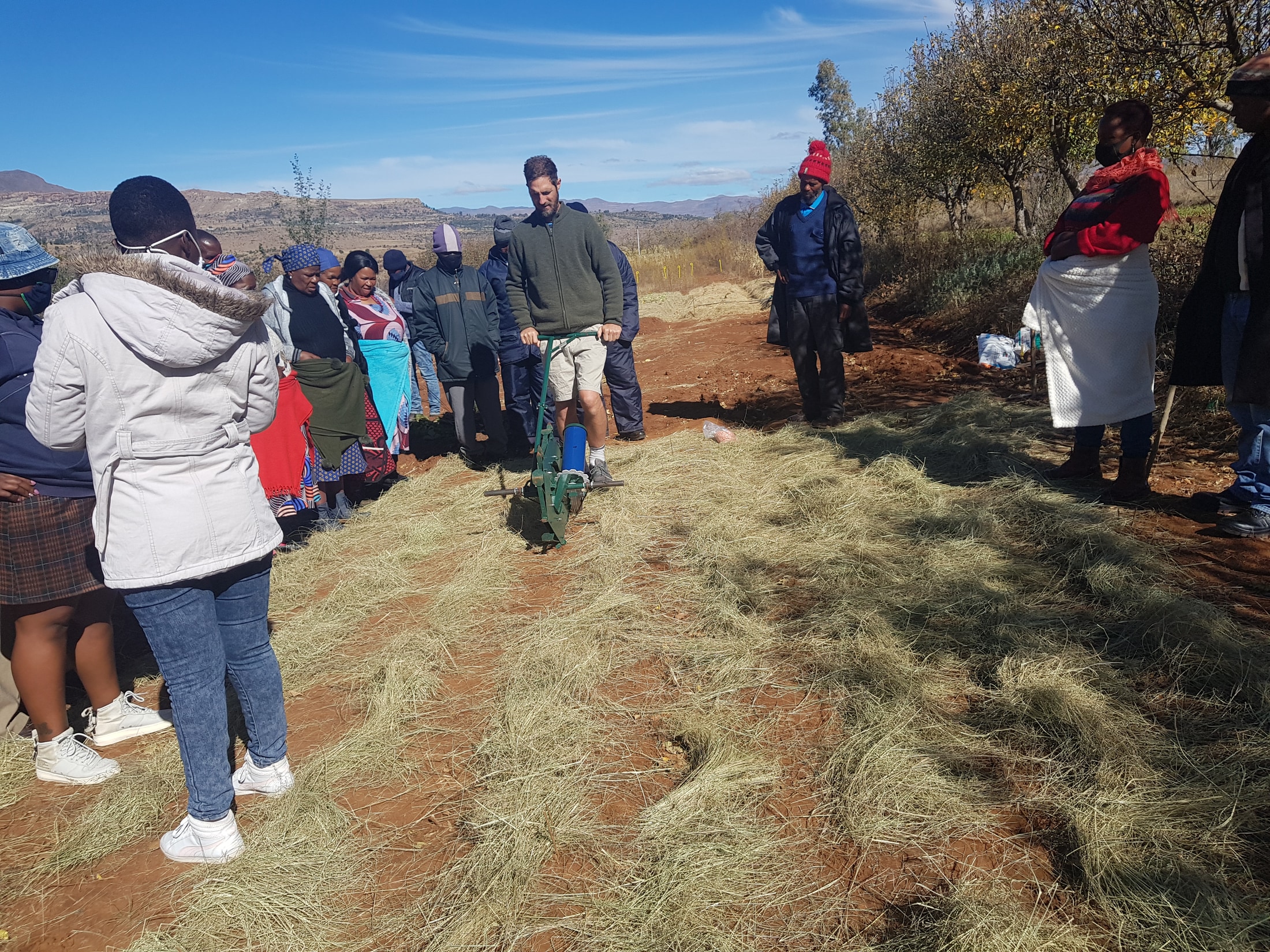
A no-till planting demonstration in Lesotho in May 2021. Participants practised using the equipment on a mulched bed and discussed its use in their gardens.
Responsibility
On-site facilitation, supervisor support and implementation guidance.
Documented work
Participants practised using the equipment during site work.
No-till planting demonstration · Lesotho, May 2021
05
Translate practice
Turn field knowledge into a repeatable system.
ImbewuField brings farm planning, learning and records into one app. These extracts cover installation and the programme reporting problems the app is intended to address.
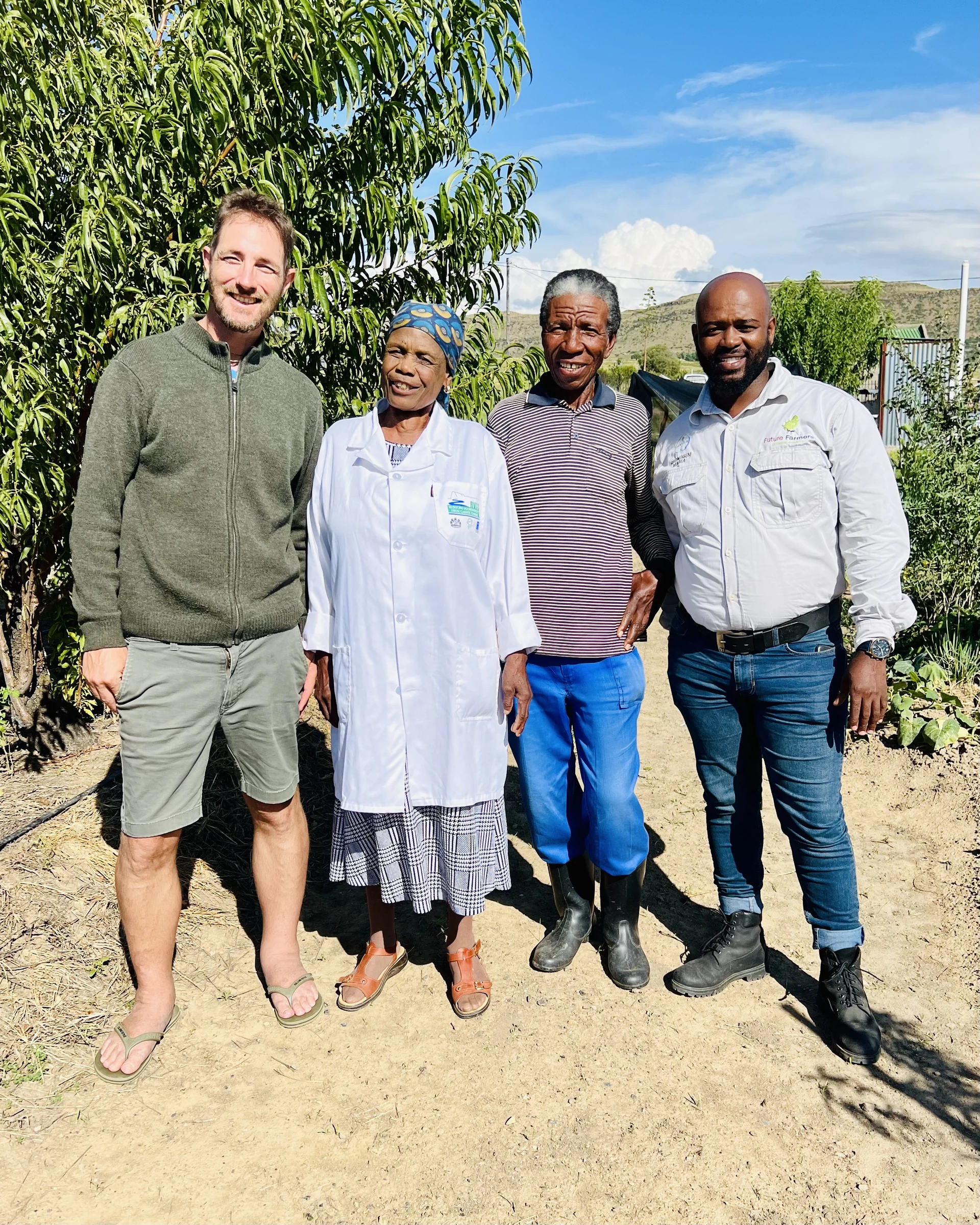
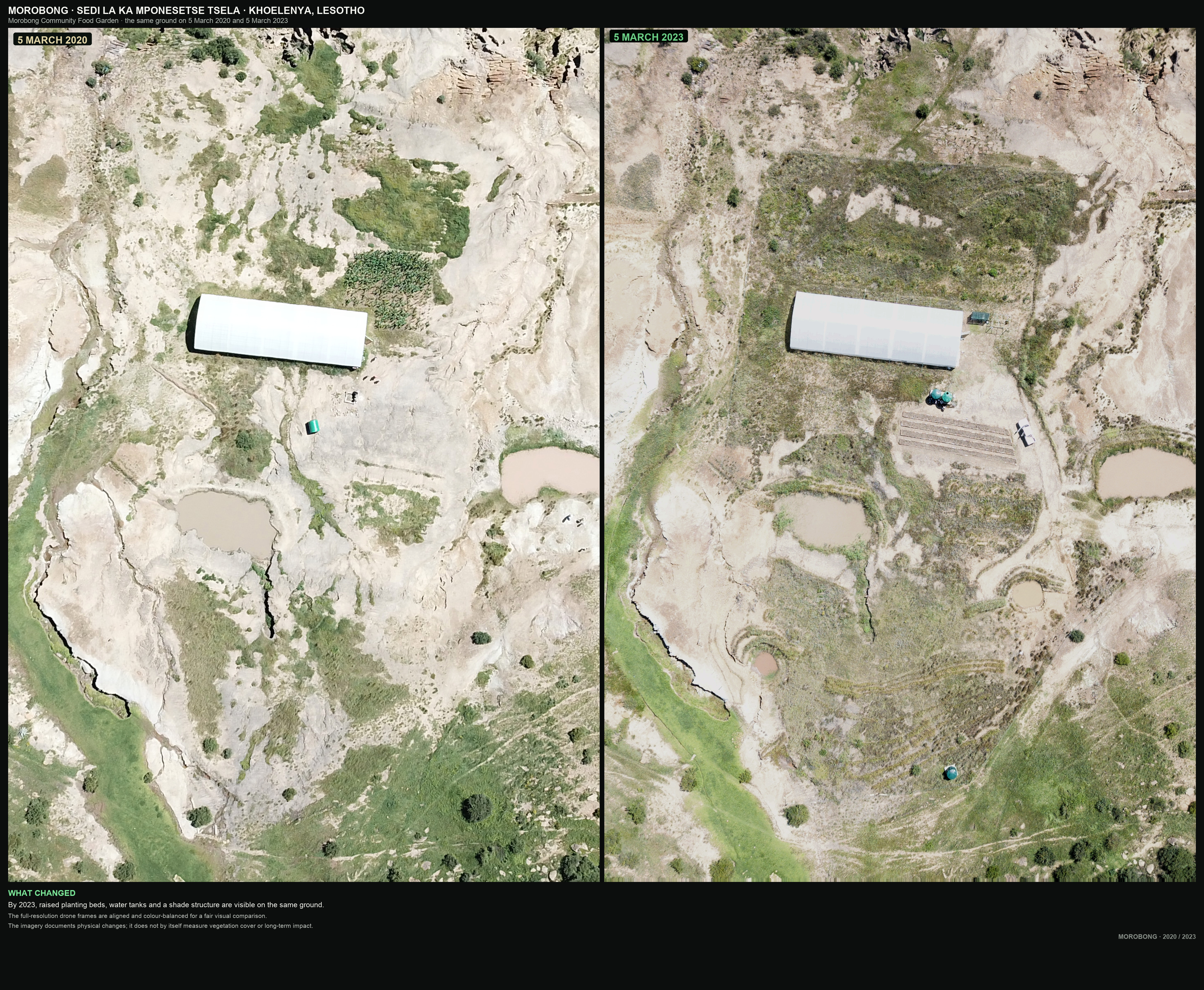
Aerial photographs of Morobong from March 2020 and March 2023 show the site before earthworks and three years later. The 2023 visit also included meetings with programme partners.
Before and after
Drone photographs from March 2020 and March 2023, aligned to compare the garden layout and built structures on the same area of ground.
Keeping in touch
A March 2023 visit with programme partners in Lesotho.
Programme-partner revisit · March 2023
Morobong Community Food Garden · March 2020 and March 2023 · comparison of layout and structures
Film archive
Four short project records.
Garden visits, practical teaching and programme work, recorded in the field. Watch a film here or explore the full channel.
Delivery described by organisations that worked alongside it.
Summaries of signed support letters for Imbewu Yoshintso and its directors, from organisations involved in the programmes.
African Conservation TrustSigned support letter · 6 December 2023
ACT confirmed work with Imbewu Yoshintso's directors since 2012, including agroecological training, facilitator development, nursery establishment, site selection, strategic oversight and mentorship.
Zululand Conservation TrustSigned support letter · 6 December 2023
ZCT recorded six jointly implemented food- and water-security projects and cited sound financial management and measurable project implementation.
Public reading shelf
Reports that can be checked.
Participant records, donor files, tailored proposals and internal architecture findings remain private or request-only.